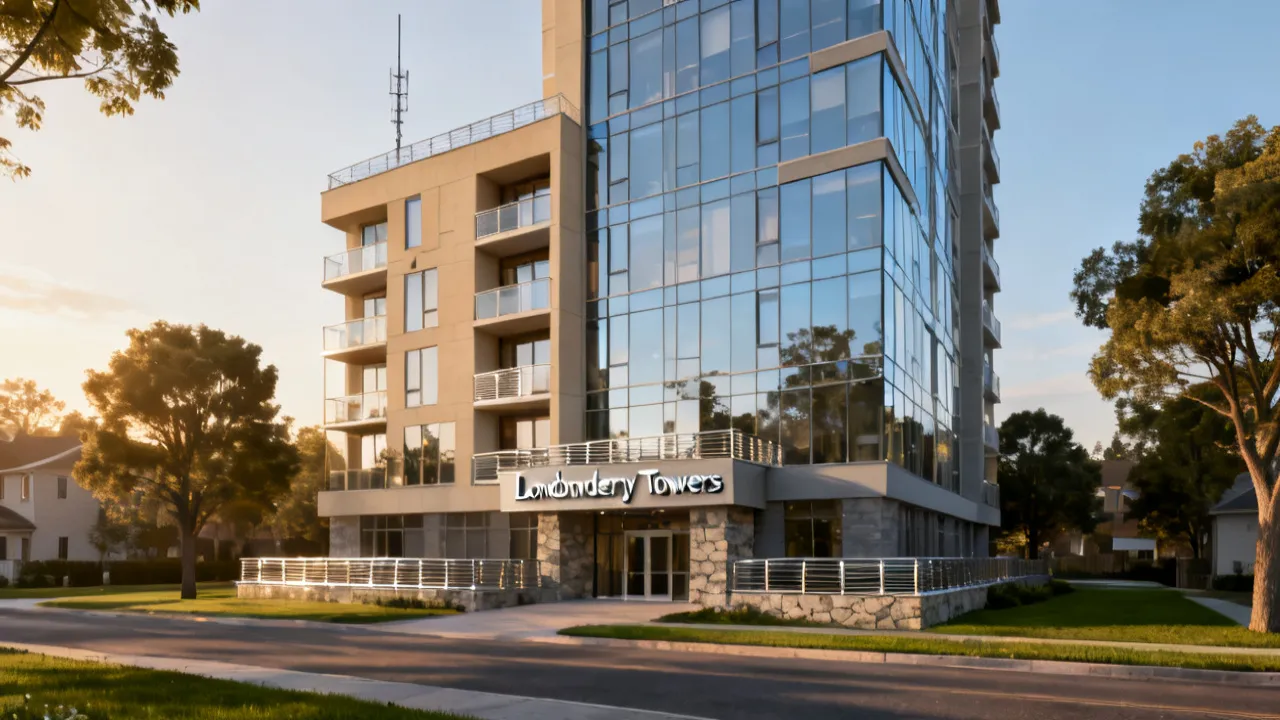
A Practical Guide to Londonderry Towers
This guide explains how Londonderry Towers is typically evaluated when people consider where to live or invest, from location and building design to buying or leasing readiness. Background context covers what “towers” developments usually offer, why residents compare amenities and service standards, and how buyers use supplier and cost assumptions during due diligence. The focus stays objective and locally relevant.
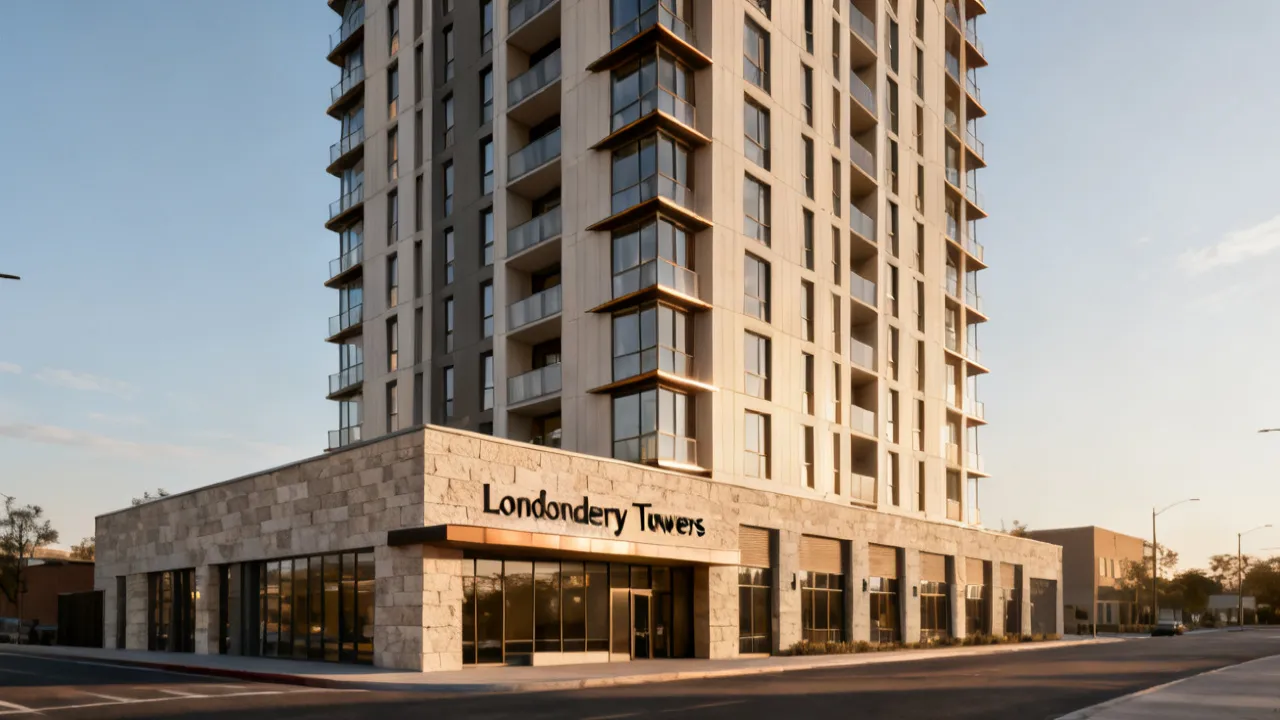
Why Londonderry Towers Deserves a Structured Evaluation
If you’re assessing Londonderry Towers, the very effective approach is to treat the decision like due diligence: confirm building quality, clarify practical costs, verify supplier/service capabilities, and only then weigh lifestyle fit. In the real estate market, “towers” are not just skyline features—they’re operational systems where maintenance, access, security, and resident experience are tightly linked. This guide outlines what to check, how professionals typically structure comparisons, and which conditions can influence outcomes.
In nearby communities, prospective residents and local investors often prioritize everyday reliability over marketing claims. That means questions like: How responsive is property management? How consistent are common-area conditions? What documentation supports the building’s ongoing upkeep? Londonderry Towers should be evaluated with those practical standards in mind.
Structured evaluation matters because tower living is high-interdependence: one weak link—like delayed elevator maintenance, unclear service-charge accounting, or aging ventilation equipment—can affect everything from daily routines to budgeting and long-term satisfaction. A structured approach helps you identify whether the building is running on a stable plan or merely benefiting from good luck and short-term appearances.
Also, a structured evaluation reduces the risk of being “misled by convenience.” For example, a strong first impression (a fresh lobby, friendly leasing staff, attractive amenities) can hide underlying operational issues that only show up over time: recurring elevator downtime, frequent HVAC complaints, unclear reserve funding, or inconsistent cleaning quality. When you evaluate systematically, you prevent isolated positives from overwhelming the full picture.
Context: What “Towers” Developments Usually Mean in Practice
Residential and mixed-use “towers” generally combine density with shared services. Compared with low-rise housing, residents typically rely more heavily on centralized building operations—elevators, HVAC systems, waste handling, security access, and common-area maintenance schedules. These factors often influence monthly budgeting, service continuity, and good condition.
When people say they “consider Londonderry Towers,” they usually mean they’re comparing it against alternatives nearby, evaluating whether the building’s design and operations align with their preferences and risk tolerance. As an industry expert would frame it, you’re not only buying space or paying rent—you’re buying into an operating model.
To understand why the model matters, think of a tower as a managed ecosystem: systems must be maintained on schedules; contractors must be coordinated; safety checks must occur reliably; and service response must be organized. The residents experience the building’s performance as a blend of engineering (how the building is built and maintained) plus operations (how problems are detected and handled).
In many markets, towers also have stronger “scale effects.” If the building has strong management, economies of scale can improve service consistency (for example, reliable cleaning schedules and standardized access systems). However, if management is weak, scale works against residents too: a single process failure can affect many units at once, turning minor issues into major disruptions.
That’s why structured evaluation should look beyond surface-level features and examine how the building is maintained, governed, and financed—because those elements determine whether the tower remains predictable and comfortable throughout your tenancy or ownership period.
Key Evaluation Dimensions for Londonderry Towers
To reduce uncertainty, professionals commonly break the decision into a few high-impact categories. Start with the fundamentals, then validate the operational details.
1) Building Quality and Envelope Performance
For high-rise living, the building envelope (windows, facade, insulation continuity) and building systems matter because they affect comfort and maintenance frequency. In practice, residents notice this through temperature stability, sound attenuation, and the frequency of repairs in common areas.
When evaluating Londonderry Towers, ask for evidence that supports ongoing performance, such as maintenance records, service logs, or documented inspections. Reliable documentation is often more informative than verbal assurances.
Envelope performance isn’t just about whether units feel “warm” or “cool” on the day you tour. It’s about whether the building prevents drafts, manages moisture, and reduces noise transfer from outside traffic or internal building movement. These are issues that can create ongoing dissatisfaction and extra costs (such as higher heating bills, persistent humidity concerns, or recurring window-related complaints).
During evaluation, you can look for practical signals:
- Do residents mention cold spots, condensation, or persistent drafts?
- Are windows and balcony doors showing signs of repeated repairs?
- Do common-area corridors show moisture staining or poor ventilation?
- Is there visible deterioration on facade elements or sealing lines?
Because towers have multiple floors and large shared surfaces, envelope problems can also become systemic. If moisture control is inconsistent, it can impact multiple levels and require more extensive remediation. That’s why evidence like inspection outcomes and maintenance history matters.
2) Common-Area Experience and Service Standards
Residents experience “quality” daily: lobby upkeep, elevator reliability, cleanliness standards, and whether staff or contractors respond effectively to reported issues. In tower environments, small operational inconsistencies can escalate faster due to higher usage and shared infrastructure.
An objective comparison focuses on service consistency—how quickly issues are addressed, whether there is a structured workflow for complaints, and how the building ensures safety and cleanliness.
Common-area evaluation should be both observational and procedural. Observational means you watch how the building looks and sounds during your visit. Procedural means you ask how problems are logged and resolved.
For example, in a well-run tower you typically see:
- Clear signage for access, deliveries, and waste disposal
- Prompt correction of defects (lighting, door closers, signage replacement)
- Consistent cleaning standards (lobby, stairwells, corridors, elevators)
- Reliable elevator operations and a planned approach to downtime
In contrast, in a poorly managed tower you may see broken signage left unfixed, irregular cleaning, or elevator delays without clear resident communication.
You can also evaluate “service standards” by asking targeted questions: Do they provide time estimates for repair completion? Is there an after-hours response plan? How do they track repeated issues? Do they conduct routine inspections before problems become visible to residents? These questions help you judge whether Londonderry Towers runs on a managed system or on reactive fixes.
3) Management Practices and Governance
Even with strong construction, outcomes depend on management. Professional evaluators look for signs of disciplined governance: budget transparency, planned maintenance cycles, and clear resident communication processes.
For Londonderry Towers, you should confirm who manages the property, what the governance model is (e.g., owner-led vs. third-party managed structures), and how long-standing service partners are contracted.
Management is a major differentiator because towers require continuous coordination. Elevator specialists, HVAC contractors, security providers, cleaners, and waste logistics must be orchestrated. If governance is unclear, coordination often breaks down—leading to delays, cost surprises, or inconsistent service levels.
Consider governance details such as:
- How decisions about repairs and upgrades get approved
- Whether budgets and reserve contributions are documented clearly
- Whether resident concerns receive consistent feedback
- How contractor performance is measured
For residents, governance shows up as the “tone” of management: do they respond with a structured plan, or do they respond with vague promises? The best towers don’t only fix problems—they communicate effectively and set expectations.
If you can, request examples of how management handles a past issue (for instance, an elevator malfunction or a recurring heating complaint). A disciplined management culture typically shows patterns: root-cause analysis, corrective actions, and documentation.
4) Pricing Structure and Total Cost of Occupancy
Because towers combine shared systems and amenities, total cost of occupancy often includes more than the headline price. Evaluations should consider recurring fees, reserve contributions (if applicable), utilities expectations, parking arrangements, and any periodic assessments.
From an industry standpoint, it is more responsible to compare “total monthly and annual cost” than to focus only on a purchase or lease sticker figure. If you have access to pricing information for Londonderry Towers, use it as a starting point for a broader cost map.
Total cost of occupancy is critical for towers because residents often experience additional pass-through costs: service charges, maintenance fees, utilities that are shared or partially shared, and costs tied to amenities (like fitness facilities, resident lounges, concierge operations, or security monitoring).
To evaluate cost properly, separate costs into categories:
- Fixed monthly costs: base rent/mortgage, mandatory service charges, parking fees
- Variable costs: utilities billed based on usage, internet bundles, optional amenity fees
- Occasional costs: one-time move-in fees, renewal fees, periodic assessments, special works charges
When a tower has insufficient reserves, it may lead to special assessments later. Even if the monthly cost appears manageable now, underfunding can create sudden financial pressure. That’s why it’s important to evaluate how the building funds its future needs—especially for systems that wear out over time (elevators, fire safety systems, HVAC equipment, roof or facade components, and common-area finishes).
If you’re comparing Londonderry Towers with another building nearby, normalize cost using an annualized view. For example, if one building charges higher monthly service fees but has stronger reserve funding and fewer planned disruptions, it might still deliver a better long-term value than a cheaper building that later requires expensive repairs or resident-funded assessments.
5) Supplier and Contractor Capability
Operations depend on suppliers: cleaning vendors, HVAC service providers, security systems integrators, elevator maintenance contractors, and landscaping maintenance (where relevant). Buyers and tenants can reduce risk by confirming that suppliers are reputable and that service levels are clearly defined.
Rather than assuming capability, ask how suppliers are selected, what response-time expectations are, and whether service agreements include performance standards and escalation paths. This is one of the very practical ways to assess whether Londonderry Towers is built to last operationally.
Supplier evaluation is important because tower problems often occur in predictable ways: equipment wears, sensors fail, and systems need periodic replacements. A strong building isn’t one that never experiences issues—it’s one that resolves issues quickly and prevents recurrence through maintenance discipline.
When you ask about suppliers, you can evaluate quality in at least four dimensions:
- Competence: Are the contractors specialized in tower systems?
- Responsiveness: What’s the expected response time for urgent versus non-urgent issues?
- Continuity: How long have key contractors been in place?
- Accountability: Are there documented service-level agreements and escalation mechanisms?
For example, elevator downtime can become more frequent if maintenance is inconsistent. HVAC comfort issues can persist if filters or controls aren’t maintained properly. Security system problems can escalate if integrators are not proactive with diagnostics.
If Londonderry Towers provides transparent service contracts or outlines performance standards, that’s a strong signal. If they can’t clearly explain how contractors are managed, you should treat that as a risk indicator and seek alternatives or additional documentation.
6) Accessibility, Transport Links, and Local Lifestyle Fit
In nearby areas, prospective residents often weigh walkability, commute practicality, access to grocery and healthcare, and the general feel of local streets. Towers can work well for people who value convenience, but only if everyday routes are workable.
Even when details vary by exact address, the evaluation logic stays the same: test the commute timing at realistic hours, consider pedestrian safety, and check that local services are convenient in the contexts you care about—morning routines, evening returns, and weekend errands.
Lifestyle fit is sometimes treated as “soft” compared with building operations, but it affects satisfaction strongly. A tower can be operationally excellent and still fail your expectations if it’s inconvenient for your routine. For instance, a resident who relies on quick grocery access and public transport may struggle if the surrounding area is difficult to navigate during peak commuting hours.
Practical checks include:
- How long does it take to reach work during rush hour?
- Is the pedestrian route safe and well-lit at night?
- Are bus/train schedules predictable relative to your departure and return times?
- Is there easy access to essential services (pharmacies, clinics, supermarkets)?
- How manageable are errands on weekends when foot traffic or traffic patterns change?
For tower residents, local lifestyle fit also includes how deliveries work, how easy it is to park or drop off, and how the building’s access system supports daily movement. A tower’s entrance, visitor policy, and delivery management can either complement or complicate your routine.
What “Due Diligence” Looks Like for Buyers and Tenants
In professional practice, due diligence typically blends document review, on-site verification, and operational questioning. For Londonderry Towers, the goal is to confirm that claims match reality.
Due diligence is not simply about “checking boxes.” It’s about converting uncertainty into evidence. Evidence can come from documents, interviews, observation, or measurable performance indicators (like historical elevator uptime or response times). The objective is to identify the highest-impact risks early so you can negotiate terms, request repairs, or choose an alternative building.
In many real estate transactions, people underestimate how much the operational side matters. Two apartments with the same layout can feel completely different if one building has better elevator reliability, clearer communication, and stronger maintenance discipline. That is why you should treat tower operations as part of the “property” you are evaluating.
Step-by-Step Guide (Conditions and Requirements)
Below is a structured supplement that readers can use to standardize evaluations. It is written as a practical checklist and a decision framework. Replace “documents/fees” with the specific items provided by the relevant seller, leasing office, or management entity.
| Step / Check | What to Request or Verify | Conditions / Requirements | Why It Matters for Londonderry Towers |
|---|---|---|---|
| 1. Confirm the occupancy and status | Current occupancy details, available units (if applicable), and any restrictions | Ask for the latest official documentation | Ensures you evaluate the building under current operating conditions |
| 2. Review cost components | Lease terms or purchase-related cost breakdown, including recurring fees | Compare total annualized cost where possible | Towers often add shared operational costs beyond headline price |
| 3. Validate maintenance planning | Maintenance schedules and records for elevators, HVAC, and common areas | Request a time-bounded history (e.g., recent years) | Operational discipline reduces future disruption and expense risk |
| 4. Supplier and contractor due diligence | Names of key vendors and service partners; service level expectations | Prefer written service standards and escalation processes | Reliability in tower systems depends on competent suppliers |
| 5. Safety and compliance documentation | Available compliance certificates and building safety inspection references | Verify that documentation is up to date | Safety readiness is non-negotiable in high-occupancy buildings |
| 6. Assess communications and governance | How residents report issues; management response workflows | Confirm reporting channels and expected timelines | Service outcomes depend on how problems are handled |
| 7. Conduct an on-site walkthrough | Observe lobby, hallways, elevator usage, noise levels, and signage clarity | Visit at multiple times if possible | Tower quality is often visible in daily operational details |
To make this checklist even more actionable, you can extend it with “how to ask” techniques. Many people request documents but don’t request context. For example, asking “Do you have maintenance records?” is useful, but asking “Can you show how many incidents occurred and what corrective actions were taken?” produces more meaningful insight.
Similarly, instead of asking “Are you responsive?” ask “What is the typical time-to-repair for elevator stops vs. light bulb replacements vs. HVAC complaints?” Even if they don’t provide exact numbers, structured answers can signal whether the building runs by process.
Additional Due Diligence Questions That Often Matter in Towers
While the table covers major categories, some tower-specific questions can reveal hidden operational realities. Consider adding these to your inquiry list for Londonderry Towers:
- Elevators: How often are scheduled maintenance checks performed? Are there performance logs? What is the process and communication plan for outages?
- Fire safety systems: Are fire doors inspected regularly? How frequently are alarms tested? Is there documentation of compliance checks?
- Waste and recycling: How is waste collected? Are there issues with odors or overflowing bins? What happens during high-usage periods?
- Water management: Are there reports of leaks, pressure issues, or hot water reliability concerns?
- Noise and vibration: Are there patterns of complaints about noise from mechanical rooms, lifts, or nearby streets?
- Access control: How are keys, codes, and visitor access managed? Is there a reliable system to reduce unauthorized entry?
- Security: Are there cameras and monitoring? What are the protocols for incidents?
- Renovations: Are planned works scheduled soon? Will they disrupt access, elevators, or common areas?
These questions help you gauge whether the building is operated proactively (planned maintenance, documented inspections, clear protocols) or reactively (repairs only after issues escalate).
Document Review: How to Read What You Receive
Document review is a major part of due diligence, but many people don’t know what they’re looking for. If Londonderry Towers provides maintenance or compliance documentation, you should look for patterns rather than single snapshots.
When you review documents, you can ask yourself:
- Are maintenance events clustered (which can indicate deferred maintenance followed by repairs), or are they consistent over time?
- Do compliance reports show repeated issues requiring follow-up?
- Are there mentions of budget constraints or reserve shortfalls?
- Do service logs show recurring faults for the same equipment?
- Is there evidence of corrective action after each incident?
If documents are available, you can often infer management maturity. A well-managed tower typically shows continuity and follow-through: issues are recorded, addressed, and documented with outcomes.
In contrast, incomplete documentation can still happen—even in good buildings. However, if documentation gaps are persistent, you should treat them as a risk and request more context.
Source-Backed Considerations for Buyers and Residents
In real estate decision-making, the strongest outcomes come from structured processes supported by established guidance on consumer protection, property condition, and risk management. For example:
- Consumer due diligence and disclosures: Many jurisdictions regulate disclosure expectations for residential properties. Check local requirements through official consumer protection resources and real estate regulatory bodies.
- Property and building inspections: Standard inspection practices exist to reduce uncertainty and identify issues that may not be visible during a short visit. For top practice, work with qualified professionals.
- Cost of ownership: Industry reports and public guidance commonly emphasize “total cost” thinking—especially where shared services and maintenance responsibilities exist in multi-unit buildings.
Note: Because your exact pricing and supplier details for Londonderry Towers were not specified here, this guide focuses on robust evaluation logic rather than unverifiable figures. If you share your available price range, leasing terms, or any supplier/managing entity details you’ve received, the framework can be tailored more precisely.
Where “source-backed” thinking becomes particularly useful is when it helps you avoid common cognitive traps: relying on marketing narratives, assuming similar buildings behave identically, or ignoring risk indicators because they seem minor at the time of viewing.
Even if the building looks good, you still benefit from using structured inspection practices and documented disclosures. Professional inspection approaches exist because towers have components that are expensive to replace or remediate and because not everything is visible during a short tour.
Industry Expert View: How Professionals Reduce Risk in Tower Purchases
An industry specialist typically treats a tower evaluation as a risk-reduction exercise. In practice, risk is not “one thing.” It splits into categories:
- Operational risk: Poor maintenance cycles, inconsistent service quality, elevator or HVAC reliability issues.
- Financial risk: Underestimated recurring fees, future assessments, or unclear budgeting logic.
- Governance risk: Weak resident communication channels or lack of transparent management workflows.
- Lifestyle risk: Mismatch between building environment and daily routines.
That’s why Londonderry Towers should be reviewed not only as an address, but as an operational environment. The “top” choice is the one with the very predictable outcomes under your personal constraints—budget, commute patterns, and comfort priorities.
Professionals also reduce risk by comparing against a benchmark. The benchmark can be another tower nearby, but it can also be a known standard: service-level expectations, documented compliance, and maintenance schedules consistent with best practice. If the building’s operational indicators lag behind comparable towers, that’s not automatically fatal, but it is actionable information.
For example, imagine two buildings where one has lower monthly costs but weaker maintenance documentation and less transparent governance. The “risk-adjusted” value might be better in the building that is more transparent and proactive, because it’s likely to prevent costly surprises and reduce day-to-day disruptions.
To operationalize this, many professionals use a scoring mindset (even informally). Assign weights to categories you personally value—such as elevator reliability or quietness—and then compare each tower against those weights using evidence. That is how the decision becomes disciplined rather than emotional.
Comparing Londonderry Towers to Nearby Alternatives
When people compare Londonderry Towers to other residential options nearby, they often compare amenities first. While amenities can be meaningful, professionals typically check fundamentals before amenities. A building with a well-run operational baseline often delivers more consistent “real value,” even if the amenity list is modest.
A practical comparison method:
- List your non-negotiables (e.g., elevator reliability, quietness, parking clarity, response speed to maintenance requests).
- Normalize costs by converting pricing and fees into an annualized view.
- Compare governance (how issues are reported, how decisions are made, who manages contractors).
- Visit twice if possible—different times reveal different operational patterns.
To improve your comparisons, also evaluate “hidden friction.” Hidden friction includes things like:
- Complex visitor or delivery procedures that cause delays
- Parking rules that are inconvenient or unclear
- Common-area restrictions that reduce usable amenity value
- Unclear waste sorting guidelines that create recurring issues
A tower might market an impressive gym, but if access requires cumbersome booking or staff availability is inconsistent, the amenity doesn’t deliver real utility. Conversely, a tower with fewer amenities can still feel more valuable if the building is calm, efficient, and easy to live in.
When you compare Londonderry Towers to nearby alternatives, consider whether those alternatives have:
- Similar building age and system maturity
- Comparable maintenance governance
- Comparable service charges and reserve funding logic
- Similar access and security models
It’s best to compare “like for like” because a newer tower can appear superior simply due to age. But an older tower can outperform if management is disciplined and reserves are maintained properly. Age helps, but operations and governance often determine the lived experience over time.
Pricing and Value: A Responsible Way to Think About Cost
Because the prompt didn’t provide specific price figures for Londonderry Towers, this guide avoids placing numbers that cannot be verified. Still, you can apply a clear method once you have actual pricing or leasing terms:
- Separate one-time vs. recurring costs. Purchase-related costs differ from monthly operational fees.
- Ask what is included. Utilities, parking, internet, and amenity access rules can vary.
- Check reserve logic (if applicable). For multi-unit structures, reserves often influence future stability.
- Use documentation over assumptions. A written breakdown is more reliable than estimates.
This approach aligns with professional consumer practice: decisions should be evidence-based, not guess-based.
To make cost thinking actionable, you can create a simple “annual cost worksheet” for each option you’re considering. Include:
- Monthly rent or monthly equivalent of purchase costs (where applicable)
- Monthly service charge or HOA equivalent
- Annual utilities estimates or included utilities portions
- Parking costs (annualized)
- Any expected one-time costs to move in or to begin occupying
- Potential special assessment risk indicators (based on reserve documentation and maintenance planning)
Then compare not just totals, but stability. A building with slightly higher recurring costs but strong maintenance discipline and reserves can reduce the likelihood of unexpected assessments. In contrast, a building with low recurring costs but incomplete reserve funding might create higher costs later and reduce your ability to plan financially.
Also, consider intangible costs: time lost due to elevator downtime, disruption from planned works, and stress caused by slow repairs. While those are harder to quantify, they matter. In a tower, small operational delays can happen often enough that residents feel them as ongoing friction.
Localization: What Matters in Nearby Communities
In nearby neighborhoods, prospective residents frequently weigh the “day-to-day feel” of living near familiar landmarks—places for quick errands, reliable services, and community rhythms. Even without naming exact streets, the mindset tends to be consistent: people want practical convenience and a sense that the building fits the local pattern of life.
When evaluating Londonderry Towers, consider local norms such as how residents typically commute, how safe walking routes feel during early or late hours, and whether the area supports weekend routines. In many UK-adjacent and Northern Ireland–influenced contexts, for instance, residents often place emphasis on steady access to essentials and predictable service patterns—especially during weather extremes. Use that lens when you assess comfort, entry systems, and common-area upkeep.
Weather resilience is a meaningful localization factor for tower living. During rain or wind, entrance operations, delivery handling, and corridor ventilation influence how “comfortable” the building feels. If common areas become slippery, poorly ventilated, or poorly maintained, weather conditions can amplify the experience. Conversely, a well-maintained tower entry and reliable access system can make daily routines feel smooth even under challenging weather.
Localization also includes local noise and street dynamics. A tower can have good internal design but still experience street-level noise if the building facade or window glazing is not strong. During your walkthrough, notice whether noise remains steady, quiet, or intrusive at different times of day. You can also consider whether there are nearby construction activities or event patterns that could affect noise levels.
Even without specifying exact routes, you can evaluate localization by running simple “habit tests.” For example:
- Walk from the building area to a grocery or pharmacy (if feasible) and time it during a realistic part of the day.
- Check whether public transport stops are convenient and how accessible they feel.
- Observe pedestrian crossings, lighting, and sidewalk conditions.
These checks don’t require deep expertise—just realistic observation and timing. But combined with the operational evaluation, they can help you decide if Londonderry Towers fits your life as well as it fits your budget.
FAQs about Londonderry Towers
1) What should I check first when assessing Londonderry Towers?
Start with building operations and cost structure. Confirm recurring fees (or service charges), maintenance schedules for elevators/HVAC/common areas, and how issues are reported and resolved.
If you only check one thing first, choose the reliability of systems that affect everyone: elevators, fire safety testing cycles, and HVAC or ventilation performance. These tend to have the highest impact on day-to-day quality of life in tower environments.
2) How do suppliers and contractors affect the living experience?
Tower living depends on reliability. Cleaning vendors, security integrators, and elevator maintenance partners influence how quickly problems are fixed and how consistently common areas meet expectations.
Think of suppliers as the building’s “nervous system.” If the nervous system responds quickly and competently, residents experience the tower as dependable. If it’s slow or disorganized, residents feel delays, frustration, and repeated issues.
3) Is price the very important factor for Londonderry Towers?
Price matters, but it’s rarely sufficient alone. Professionals typically compare total cost of occupancy, including recurring fees, utilities expectations, and potential future assessments where applicable.
In a tower, the lowest headline price can still yield a higher total cost if maintenance planning is weak, because you may pay through fees later or through disruptions that have your own time cost.
4) What’s the top way to verify whether management is effective?
Ask for documented maintenance history, request examples of recent service responses, and evaluate communication workflows—how residents raise concerns and how the management entity tracks and closes issues.
Effective management often shows in small ways: consistent timelines for repair completion, clear updates during outages, and structured documentation after incidents.
5) Should I visit Londonderry Towers more than once?
Yes, if feasible. Visiting at different times helps you assess noise, lobby usage patterns, and overall day-to-day operational steadiness.
A second visit can reveal issues you won’t notice initially—such as morning elevator congestion, evening noise from street traffic, or patterns of how deliveries and access work during peak hours.
6) Can I rely on marketing descriptions alone?
No. Marketing descriptions can be directional, but objective evaluations require documentation, verified maintenance records, and clear cost disclosures.
Marketing may describe amenities well, but it rarely provides the operational depth needed to judge reliability. Use marketing as a starting point, then verify with evidence.
7) What documents are typically important during due diligence?
Depending on whether you’re renting or buying, you may need lease or purchase terms, service charge breakdowns, maintenance references, safety/compliance references, and any governance or reporting documentation.
Even if you don’t receive every document, you can often request a summary or supporting evidence. If the management entity cannot provide structured information, that itself is a signal worth considering.
Conditions and Requirements: When to Be Extra Careful
Even a well-designed tower can present challenges in specific scenarios. Be especially thorough if any of the following apply:
- Unclear or inconsistent fee information—if totals are not transparent, request itemized breakdowns.
- Incomplete maintenance history—lack of records can increase future uncertainty.
- Frequent operational disruptions—if elevator/HVAC reliability appears inconsistent, investigate root causes.
- Governance opacity—if residents cannot understand budgeting or decision processes, risk increases.
- Mismatch with commute and routines—a tower may look ideal but not fit your daily patterns.
These conditions aren’t accusations; they are risk indicators. The goal is to help you ask smarter questions about Londonderry Towers before you commit.
When you identify risk indicators, you can respond strategically. For example:
- If fees are unclear, request a written service charge breakdown and ask for prior-year statements.
- If maintenance history is incomplete, ask for a list of recent repairs and ask what system components were replaced or upgraded.
- If disruptions are frequent, ask about contractor performance and whether there are planned corrective actions.
- If governance is opaque, ask how resident concerns are handled and how decisions about budgets are communicated.
Sometimes these actions lead to improved transparency. Other times they reveal deeper issues that make Londonderry Towers a less suitable fit. Either outcome is useful, because it turns speculation into actionable information.
Conclusion: Turning Londonderry Towers into an Evidence-Based Decision
In the end, Londonderry Towers should be evaluated through a disciplined process that balances lifestyle fit with operational reliability and transparent cost structure. When you assess building systems, management governance, supplier capability, and total cost, the decision becomes clearer—and you reduce uncertainty. Use the checklist provided, ask for documentation, and compare against nearby alternatives using normalized cost and practical service standards. That is the very professional path to a confident outcome.
To make this “professional path” real in your own workflow, treat each stage as a filter. Start with evidence (documents, maintenance logs, compliance checks). Then validate with experience (on-site observation, visit timing, service-level inquiry). Then compare with alternatives using normalized and annualized cost thinking. Finally, decide based on both quantified risk and your personal routine fit.
When you follow that structure, you don’t just decide whether Londonderry Towers is appealing—you determine whether it is dependable. Dependability is the foundation of satisfaction in tower living, because towers are built to function like systems, and the best choices are the ones that keep working smoothly as time passes.