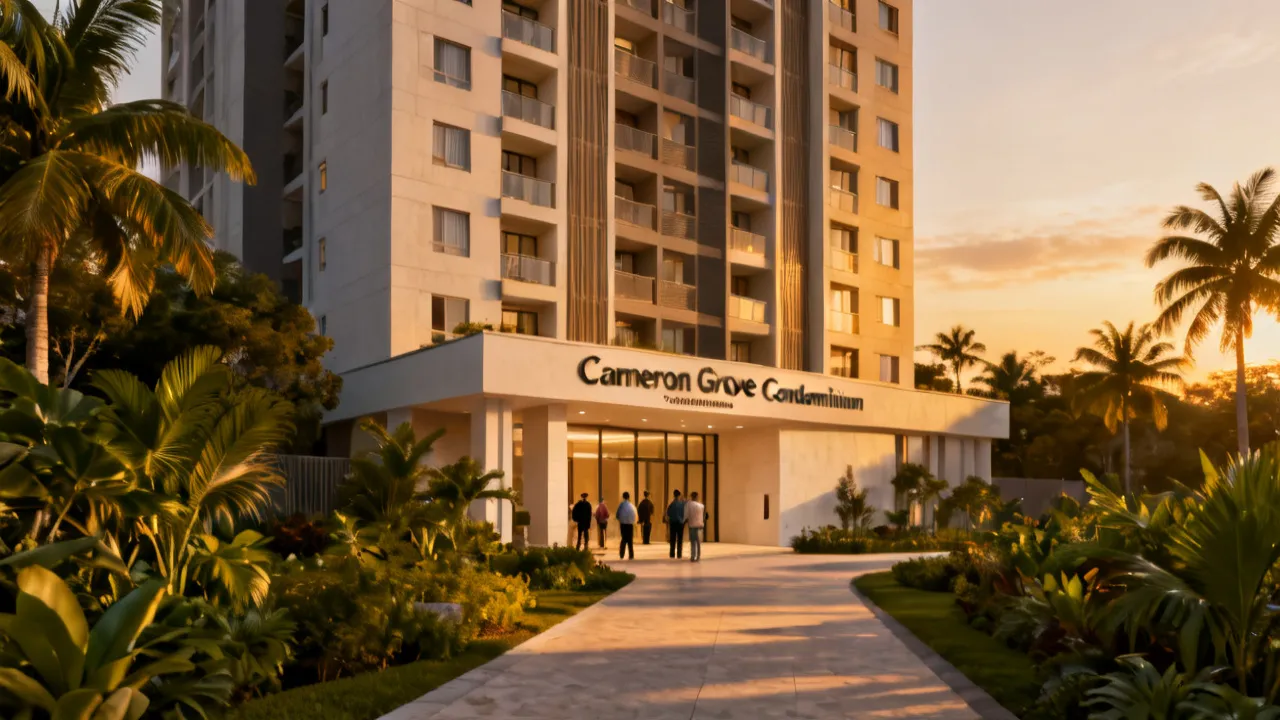
A Practical Guide to Londonderry Towers
Londonderry Towers is discussed here as a residential building concept—useful for understanding what buyers and renters typically evaluate. Objectively, “Londonderry” is associated with Northern Ireland and the city region, while “Towers” signals a multi-storey living development. This guide focuses on how stakeholders assess location, building features, costs, and supplier credibility, with conditions and requirements provided later.

Key Takeaways Up Front: What to Assess at Londonderry Towers
If you’re evaluating Londonderry Towers, begin by confirming the essentials that directly affect day-to-day livability and good value: the building’s configuration, management standards, access and transport convenience, and the documentation that supports any advertised price. In real estate practice, the “top fit” is rarely about a single headline figure—it’s about how costs, service quality, and building conditions align with your needs.
From an industry perspective, Londonderry Towers should be assessed through a structured lens: (1) verify the legal and operational status of the development or tenancy, (2) examine the building’s construction and maintenance approach, (3) confirm service charges and recurring costs, and (4) match amenities and layout to your lifestyle. The objective is to reduce uncertainty before committing time or money.
Because tower-style developments concentrate critical systems and shared responsibilities into a communal framework, your evaluation should also focus on governance: who manages the building, how complaints are handled, how emergencies are reported, and how planned maintenance is budgeted. It’s the combination of these elements—often buried in paperwork—that determines whether your experience feels smooth and predictable, or frustrating and expensive.
To keep this guide practical, the sections that follow expand on what experienced buyers and renters typically verify in the UK and Northern Ireland context, with an emphasis on evidence, documents, and repeatable decision steps rather than assumptions or marketing claims.
Why “Londonderry Towers” Matters in Buyer and Renter Decision-Making
When people search for Londonderry Towers, they’re usually seeking a practical answer to a simple question: “What does living there look like, and what will it cost me over time?” Developments branded with “Towers” typically imply vertical living, shared facilities, and systems (lifts, fire safety management, waste handling, communal cleaning) that require ongoing coordination. That means the quality of building management and the clarity of documentation can be as important as the unit’s internal appearance.
In many tower-style environments, residents don’t just “buy a flat”—they become part of a managed building system. If that system is run well, routine life feels effortless: repairs are scheduled, emergencies are handled with discipline, and service charges stay within a sensible range. If the system is run poorly, minor issues can become repeated problems, and long-term costs can rise sharply due to deferred maintenance.
Also, the name “Londonderry” is strongly associated with the Londonderry area in Northern Ireland, where residents often weigh commuting routes, local amenities, and seasonal comfort. While search intent may vary, local buyers and tenants commonly consider whether a building supports everyday routines—school runs, grocery trips, healthcare access, and evening services—without excessive time costs.
It’s worth acknowledging something that many first-time renters or buyers overlook: convenience is not only about distance. It’s about reliability. A location that is “close” on a map may still be inconvenient if access requires multiple bus changes, if road conditions worsen during winter, or if parking is restrictive. In Northern Ireland, where weather can shift quickly, the predictability of routes and walking conditions can meaningfully impact your day-to-day experience.
Background: Interpreting the Terms “Londonderry” and “Towers”
“Londonderry” references a place-name identity connected to the city region of Derry/Londonderry in Northern Ireland. “Towers” generally indicates a multi-storey property typology. In supply and demand terms, vertical living often changes the trade-offs compared with lower-rise housing: you may benefit from compact layouts, central locations, and shared amenities, but you also need strong governance for communal spaces.
In objective market terms, residential decisions typically hinge on four pillars: (a) affordability and total cost of occupancy, (b) property quality and safety compliance, (c) convenience and neighborhood compatibility, and (d) supplier transparency—meaning how clearly the provider or managing agent explains terms, responsibilities, and expected costs.
In tower developments, pillar (d) is frequently the differentiator. Two units can look similar on the inside yet feel radically different to live in, because the shared service environment behind the walls differs—especially in buildings with lifts, communal heating/ventilation components, or recurring compliance requirements.
For buyers, your evaluation should also account for resale logic. Buyers in the future will likely ask the same types of questions you are asking now—about charges, building condition, and management reputation. So your due diligence is not only about “what happens after you move in,” but also about how defensible your purchase decision is if you ever need to exit.
Critical Factors Buyers and Renters Should Verify
Because you asked for a professional and objective stance, the following sections focus on what serious stakeholders evaluate in practice—without relying on unverifiable claims.
To make this more usable, each major factor below includes not only what to assess, but also why it matters and what type of evidence you can reasonably request. This helps you avoid the common trap of asking for vague reassurance instead of actionable documentation.
1) Price Clarity and Total Cost of Occupancy
Even when the headline price or monthly payment is the first figure people notice, professionals commonly assess the total cost of occupancy (TCO). That includes service charges, maintenance contributions (where applicable), utility expectations (including heating type and metering), parking arrangements, and any expected periodic renewals for shared systems.
For Londonderry Towers specifically, the very important step is to ensure the cost information is presented with itemization and timing. For example, confirm whether service charges are estimated or fixed, whether they cover building insurance, lift maintenance, communal lighting, grounds maintenance, and compliance inspections. If a supplier presents a single figure without breakdown, a cautious buyer or tenant should request the underlying schedule and past statements where available.
In practice, TCO is often where “budget surprises” originate. A unit might appear affordable at the start, but service charges can increase due to rising costs of contractors, emergency repairs, or catch-up on previously deferred maintenance. Understanding the pattern of charges—how they have moved over time—is as important as understanding what they are at present.
When reviewing costs, it can help to think in categories:
- Fixed periodic costs: Items that tend to recur monthly or quarterly (for example, common area cleaning, scheduled maintenance contracts).
- Variable costs: Costs that fluctuate (for example, utilities for communal systems, waste collection charges depending on contract pricing, or reactive repairs).
- Major works / reserve impacts: Contributions related to larger refurbishment cycles (for example, lift replacement, facade repairs, roof works, or compliance upgrades).
- Special assessments: One-off or emergency contributions if unexpected problems occur or if major works are approved.
Also ask whether the building uses any form of “sinking fund” or reserves approach (where relevant), and if so, how that reserve is measured and reported. Even if reserves exist, you still want transparency about what reserves are intended to cover versus what needs additional contributions.
For renters, the cost focus typically includes: rent plus any service charge portion (if applicable), plus whether utilities are billed separately and how consumption is measured. For buyers, it often includes: mortgage costs (outside this guide), service charges, ground rent (if applicable), insurance arrangements, and the potential for future major works. In tower developments, buyers should treat future costs as a core part of value assessment, not as a peripheral risk.
2) Supplier Credibility and Documentation
From an industry expert viewpoint, supplier credibility isn’t about marketing tone—it’s about verifiable governance. For Londonderry Towers, assess who you would actually contract with or who manages the building day to day. If the information is hosted on third-party channels, confirm the managing agent identity and their responsibilities.
Ask for documents that are standard in professional property transactions, such as tenancy agreements (for renters), service charge summaries, building policy outlines, and any available compliance records. Where the building has communal systems—lifts and fire safety equipment—request evidence of maintenance and inspection routines.
A credible supplier (or managing agent) tends to do three things consistently. First, they respond to requests with clear, structured information. Second, they provide documents rather than only verbal explanations. Third, they can explain responsibilities in plain language, including what is tenant/leaseholder responsibility versus what belongs to the building management.
For example, when you ask about maintenance requests, a reliable management chain will typically explain:
- how to report issues (phone portal, email, online system, or in-person process);
- expected response times for different categories (urgent, routine, cosmetic);
- how contractors are selected and scheduled;
- how you receive updates and closure confirmation.
When documentation is missing, delayed, or inconsistent, treat it as a risk indicator. That doesn’t automatically mean the building is unsafe, but it does mean your ability to verify reality is limited—and limited verifiability is rarely a good position for a buyer or tenant to accept.
Because tower environments involve shared liabilities, the quality of documentation is often tied to accountability. In well-managed buildings, there is usually evidence of decisions, approvals, and inspection records. In poorly managed buildings, those records may be incomplete, out-of-date, or difficult to obtain.
If you’re evaluating through an agent or intermediary, try to find out who actually has the authority to take action. “Who do I contact when something breaks?” and “Who pays for what?” are practical questions that reveal credibility quickly.
3) Building Condition and Maintenance Standards
Vertical properties often experience different wear patterns than detached homes. That means lift reliability, corridor maintenance, ventilation systems, and water pressure consistency can significantly affect satisfaction. A professional due diligence approach would include:
- Inspecting communal areas and identifying signs of good deferred maintenance.
- Confirming how quickly maintenance requests are handled and what the escalation process looks like.
- Reviewing whether the building has planned maintenance schedules for critical infrastructure (again, where such information is available).
For Londonderry Towers, a practical question is whether the management can provide a clear picture of planned works—especially those that influence future costs.
Building condition is also about “hidden” elements. Even if the lobby looks presentable, there may be concerns with water ingress, insulation gaps, or aging communal electrics. In tower environments, those hidden issues can persist behind finishes and only become visible later, often after they’ve caused additional costs.
During your assessment, consider asking for:
- records of lift servicing and fault callouts (frequency matters);
- confirmation of fire safety equipment checks and maintenance routines;
- evidence of roof/facade/waterproofing inspection cycles (if applicable);
- any known planned major works and their estimated timelines.
Even without deep technical access, you can often infer maintenance standards by observing details:
- Are there persistent stains, cracks, or repeated patch repairs in corridors?
- Is lighting consistently working, or are there broken bulbs for long periods?
- Do smell conditions (e.g., damp odor) appear in specific areas?
- Is the waste disposal area clean and properly managed?
- Are lifts maintained to a clean standard (doors, call points, panels)?
For renters, the question is not only “is the building in good condition?” but also “will it stay in good condition while I’m living here?” Maintenance quality impacts your daily life, your comfort, and your safety. For buyers, it affects both quality of life and resale logic.
It can also be helpful to ask whether the building has experienced recent emergencies or major disruptions, and what was done to address underlying root causes. A one-off issue that is corrected properly may be acceptable, but repeated disruptions may indicate systemic management problems.
4) Layout Fit: Accessibility, Noise, and Everyday Function
A “good” unit is one that fits the rhythms of your daily life. In tower-type developments, issues like sound transmission between floors, corridor noise, and lift proximity can matter. Professionals typically recommend:
- Assessing orientation and natural light patterns across seasons (Northern Ireland weather can feel especially variable).
- Considering how you use space: home office needs, storage capacity, and kitchen practicality.
- Checking for practical access: lift waiting, entry system reliability, and whether stairs are needed for emergencies.
Layout fit is not only about aesthetics. It’s about how practical it is for your routine: where deliveries arrive, where you park your everyday items, and how you manage privacy in shared-building contexts.
To make this evaluation more detailed, consider these sub-questions:
- Sound: Can you hear footsteps from above or music from neighboring units? If possible, listen at different times of day.
- Heat and ventilation: Does the unit warm evenly? Are vents functional? Do windows open appropriately? Are there signs of condensation around windows or in corners?
- Storage: Are there wardrobes, cupboards, and adequate space for seasonal items? Tower units can be compact, and underestimating storage is a common frustration.
- Kitchen ergonomics: Are work surfaces usable, and is there enough space for appliances you expect to use regularly?
- Bathroom function: Water pressure, ventilation effectiveness, and whether extractor fans are adequate.
- Circulation: Does the layout allow movement without bottlenecks, especially when carrying groceries?
Noise sensitivity is a particularly important dimension in tower living because your unit shares structural elements with other households. Even well-insulated buildings can experience noise patterns depending on neighbor behavior and how communal spaces are used. If you know you’re sensitive to sound, you should prioritize observations and test the environment during your viewing.
Also consider your accessibility needs. If you rely on lifts regularly or have mobility constraints, check how lift systems behave during busy periods. If lift access is unreliable, it can transform daily life quickly—especially in winter weather when outdoor stair use is less comfortable.
5) Local Convenience: Neighborhood Compatibility Near Londonderry Towers
Location evaluation is more than a map dot—it is about lifestyle compatibility. For residents near Londonderry Towers, common considerations include local transport links, grocery access, healthcare services, schools, and leisure spaces. In the nearby Londonderry area, many households value walkable essentials or short commuting journeys, especially during darker winter months.
Professionals also consider how local amenities influence habit formation: a building that places daily needs within a comfortable travel time often reduces friction in routines.
Convenience should be evaluated on multiple levels:
- Daily essentials: supermarkets, pharmacies, post office services, and basic retail.
- Healthcare: access to GP appointments, dental services, and emergency care routes.
- Education (if relevant): school catchment logic, travel times, and practical school-day logistics.
- Transport: bus routes, proximity to main roads, and how commuting feels during weather disruptions.
- Leisure: parks, gyms, libraries, and community spaces that support your lifestyle.
Because Northern Ireland can experience seasonal rain, wind, and low temperatures, you should also consider “winter friction.” Ask yourself: will you be comfortable walking to amenities if roads are wet or if visibility is reduced? If you rely on public transport, verify whether waiting areas are sheltered and whether connections remain consistent during adverse weather.
Another practical factor is parking. Tower-style living can come with parking restrictions, permit systems, or limited spaces. Even if parking is available, it might be allocated differently (e.g., some units receive one space while others don’t). Confirm the rules early because parking uncertainty is one of the highest friction issues for residents.
Industry Context: How Professionals Evaluate Residential Developments
Across the UK and Northern Ireland, property evaluation tends to follow established risk-management principles. Industry bodies and guidance frameworks emphasize transparency, safety compliance, and clear contracting terms. For example, UK building safety and management expectations have been increasingly detailed over the past several years, with emphasis on documented compliance processes. For renters, clarity on duties and costs is typically governed by contractual terms and consumer protection expectations; for buyers, due diligence and survey practices help reduce risk.
To ground the approach in reliable references, it is common to consult:
- UK Government guidance on building safety and fire safety responsibilities (where applicable to residential buildings).
- Property transaction top practices referenced by professional survey and real estate organizations.
- Independent consumer advice regarding service charges and tenant obligations.
These sources help keep evaluation objective and reduce reliance on informal online claims.
In practice, professionals also use structured question lists. This guide mirrors that approach by translating “due diligence thinking” into a set of checks you can perform without specialized expertise. You don’t need to be a building engineer to ask the right questions; you do need to ensure that those questions are answered with evidence.
Another common industry pattern is to treat unresolved questions as a reason to pause. In real estate, rushing often leads to avoidable costs: undisclosed service charge items, unexpected repair cycles, or unclear responsibility for compliance updates. A disciplined approach can prevent those outcomes.
Comparison Table, Step-by-Step Guide, and Conditions/Requirements (Supplement)
The information below is designed as a supplement to the main analysis—an at-a-glance tool plus a practical process. It is intentionally framed to help you apply consistent judgment when reviewing Londonderry Towers.
Use it during viewings and during your follow-up calls/emails. If you document what you learn in a structured way, you’ll also be able to compare Londonderry Towers against other properties without relying on memory or impressions.
| Evaluation Area | What to Compare | Evidence to Request | Common Requirements |
|---|---|---|---|
| Price / Payment Terms | Headline cost vs. total monthly or annual occupancy cost | Itemized charges, payment schedule, included vs. excluded costs | Clear contract terms; confirmation of service charge structure |
| Supplier / Managing Agent | Responsibility clarity for repairs, compliance, and admin | Provider identity, management contact process, service level notes | Documented roles; responsive maintenance procedures |
| Maintenance and Building Systems | Lift, communal lighting, ventilation, and safety equipment upkeep | Maintenance records or summary; inspection cadence | Compliance with relevant safety obligations; planned works visibility |
| Unit Condition | Fit-out quality and practical issues (plumbing, heating, ventilation) | Survey/safety report (where applicable), inspection notes | Access for inspection; documentation of warranties where available |
| Location and Convenience | Travel time to daily essentials and seasonal comfort | Local area notes; travel comparisons | Reasonable commuting routes; consideration of winter conditions |
| Legal and Contractual Terms | Responsibilities, renewal terms, notice periods, and escalation | Tenancy or purchase documentation; schedule of obligations | Readability and no unclear commitments; professional review |
Step-by-Step Guide: How to Assess Londonderry Towers Responsibly
- Define your objective: Are you comparing as a renter (comfort, costs, contract terms) or as a buyer (value, condition, good obligations)?
- Collect the full cost picture: Request itemized service charges/fees and clarify what is included. Confirm payment frequency and review period.
- Verify the supplier and management chain: Identify who manages day-to-day matters and who is responsible for repairs and compliance.
- Review building and maintenance evidence: Ask for summaries of maintenance schedules and compliance-related documentation where available.
- Inspect the property practically: Check heating performance, ventilation behavior, storage capacity, sound concerns, and overall condition.
- Confirm access and procedures: Understand how entry works, how lifts are managed, and what the emergency procedures entail (at least at a high level).
- Use a third-party professional where appropriate: If buying, consider a surveyor; if renting, consider independent advice on contract terms.
- Decide based on fit, not speculation: Choose the option where costs, service standards, and building condition align with your risk tolerance.
To extend the practical process, consider adding two extra “quality assurance” steps that experienced purchasers often use:
- Ask for the “last 12 months” story: Request a summary of what maintenance issues were raised and what was resolved. A pattern emerges when you view multiple instances rather than one isolated claim.
- Run a “worst-case cost” thought experiment: Even if major works seem unlikely, ask what could happen operationally (e.g., lift repairs, compliance upgrades) and how costs would be handled.
Conditions and Requirements: What Should Be Present Before You Commit
To keep the evaluation objective, consider these conditions and requirements as “must-haves”:
- Complete documentation: Costs and responsibilities should be clearly described in writing.
- Transparent maintenance approach: The managing party should be able to explain how repairs and planned works are handled.
- Safety compliance visibility: You should not rely on vague assurances; ask for summary evidence of relevant safety checks.
- Contract clarity: If something is unclear—especially around charges, renewals, or responsibilities—seek professional clarification before proceeding.
- Access for due diligence: You need opportunities to inspect and verify. If access is restricted without reason, reassess.
Beyond the must-haves, you should also consider your “comfort with uncertainty.” If you cannot obtain evidence of maintenance standards, or if charges are poorly explained, you are effectively accepting a level of uncertainty that may not align with your budget or risk tolerance. That doesn’t mean you must walk away immediately, but it should influence how you negotiate, how you set aside funds, and whether you choose to proceed with professional inspections.
Also, consider whether you understand the “decision pathway” for major works. If a major refurbishment is required, who approves it? How is it budgeted? How will residents be informed? In a well-run building, these processes are known and documented, not handled informally.
FAQs About Londonderry Towers
Q1: What does “Londonderry Towers” typically refer to?
It generally denotes a residential tower-style development associated with the Londonderry area. “Towers” signals a multi-storey living environment with shared building systems and communal management.
Q2: How should I interpret price information for Londonderry Towers?
Treat any headline figure as a starting point. Request an itemized breakdown of recurring costs—especially service charges or building-related fees—so you can evaluate total cost of occupancy over time.
Q3: Who is usually considered the “supplier” for a tower development?
In property contexts, “supplier” can refer to the party providing the unit or leasing arrangement, and/or the managing agent handling day-to-day building matters. Confirm the exact responsible party and their role in maintenance, compliance, and customer service.
Q4: What documents should I ask for when reviewing Londonderry Towers?
Depending on whether you’re renting or buying, ask for tenancy or purchase documentation, service charge summaries (if applicable), and any available maintenance/compliance summaries for shared systems such as lifts and safety equipment.
Q5: Are inspections important for tower-style residences?
Yes. Tower-style properties have shared systems and communal infrastructure. A practical inspection helps you spot issues related to heating performance, ventilation, sound, and general condition—along with verifying what’s been disclosed.
Q6: What local considerations matter very near Londonderry Towers?
Consider daily convenience (schools, shops, healthcare), typical travel times in winter, and how the neighborhood supports routines. In Northern Ireland, seasonal weather can influence whether a location feels practical or burdensome.
Q7: How can I evaluate whether management is reliable?
Look for clear communication procedures, transparent cost explanations, and evidence of planned maintenance. If responses are vague or delayed, treat that as a risk indicator.
Expert Perspective: Common Pitfalls and How to Avoid Them
In professional practice, a surprising number of problems stem not from the building itself but from mismatched expectations. Here are pitfalls that frequently arise when people evaluate tower developments like Londonderry Towers:
- Comparing units using only the headline cost: This can obscure service charges, insurance contributions, or recurring fees tied to communal systems.
- Assuming “included” means “fully covered”: Always verify what “included” actually covers and whether there are exclusions.
- Relying on hearsay about maintenance: Ask for summary evidence and understand the repair escalation path.
- Underestimating contract importance: Lease and tenancy terms often define how disputes are handled and what notice is required.
- Neglecting to verify supplier identity: Confirm who is responsible—especially if you’re dealing through an intermediary.
It’s also common for buyers and renters to underestimate “community-level friction.” For example, a building might be quiet in your unit but could have recurring issues in communal corridors: misuse of bins, inconsistent cleaning schedules, or unreliable waste management. These issues don’t always appear in online descriptions, but they show up in lived experience and can become an ongoing source of annoyance.
Another pitfall involves emergency preparedness. People often treat emergency procedures as background information rather than a practical factor. While you don’t need to become an expert, you should still understand how alarms are raised, how evacuation routes are marked, and how lift failures are handled. In tower developments, these factors impact your sense of security.
Responsible Use of Data and References
Because you requested reliable sources when citing statistics or industry performance, this guide intentionally avoids unverified numerical claims about pricing trends or occupancy rates. Instead, it focuses on decision frameworks used by professionals in property evaluation.
For contextual background on residential building safety expectations and responsibilities, you may consult UK Government guidance on building safety and fire safety obligations, as well as consumer advice regarding tenancy rights and service charge interpretation. For industry methodology, professional organizations that support surveying and property transactions often provide checklists and top-practice notes. Using these references helps keep your evaluation evidence-based.
In other words: rather than trying to prove that a building is “good” via anecdotes, focus on whether the building is run with documentation, clarity, and compliance discipline. That approach is consistent with how professionals reduce risk in real estate decisions.
How Londonderry Towers Fits Different Lifestyle Profiles
Not every tower building is the right match for every household. The “top” choice depends on your priorities:
For Renters Prioritizing Convenience
If you value a streamlined lifestyle, focus on reliable access, responsive maintenance, and predictable recurring costs. Verify what you pay monthly beyond rent (where applicable) so your budget remains stable.
For renters, also consider how easily you can manage daily tasks. For instance, if the building’s entry system is complicated or unreliable, that affects your everyday flow. Similarly, if communal areas are not maintained properly, you may feel discomfort each time you pass through the building—whether or not you notice it at the first viewing.
Renters should also consider contract flexibility. If you might need to relocate due to work changes, understand the notice periods and early termination clauses. While this guide doesn’t provide legal advice, the key point is that contract terms can materially impact your lifestyle and financial planning.
For Buyers Prioritizing Long-Term Stability
For ownership decisions, condition and governance become central. Assess whether the building’s management approach supports consistent maintenance and avoids sudden expense spikes due to deferred works.
Buyers should also think about long-term systems longevity. In tower developments, certain elements—lifts, roof coverings, windows, fire safety components—follow lifecycle patterns. If the building’s reserve planning and contractor scheduling are well managed, these lifecycles can be handled predictably. If they are not, costs may concentrate into shorter windows, creating budget stress.
Also consider how the unit itself is likely to age. Check whether internal finishes are newly updated or merely cosmetically refreshed. Cosmetic refreshes are not inherently bad, but they can delay visibility of underlying issues. A buyer should aim for evidence that the building and unit have been maintained, not just refreshed.
For Households Planning Home Office or Remote Work
Evaluate layout, storage, and noise. Tower-type buildings can be suitable for remote work when the unit’s orientation and construction reduce sound transmission and provide dependable heating/ventilation.
If you work from home, noise is often the determining factor. Consider:
- Where is your likely desk location relative to external walls and internal neighbors?
- How loud are elevators/lifts during peak times?
- Do corridors create a constant background noise level?
- Does heating cycle frequently, creating audible systems noise?
Also consider lighting. Natural light affects productivity and fatigue. In Northern Ireland winter, the quality of daylight can vary, so the unit’s orientation can become more important than expected. Ask for the best evidence available during viewing (for example, daylight conditions at relevant times, though you may not be able to replicate daily routines perfectly).
Finally, evaluate internet and mobile signal if possible. While signal issues are not unique to towers, shared infrastructure can sometimes influence performance due to building materials or layout. If the building is near interference sources, you might need to confirm connectivity before committing.
For Residents Sensitive to Community and Shared Spaces
Since tower living includes shared corridors and communal systems, consider how management handles cleanliness, waste, and safety practices. These details affect comfort more than many people initially expect.
In shared spaces, your experience is not limited to your unit door. Residents can experience discomfort from odors, poor ventilation in communal areas, overflowing bins, or inconsistent cleaning schedules. If these issues exist, they can be a daily annoyance.
So, when you visit Londonderry Towers, spend a little time observing communal areas beyond a quick walk-through:
- Do corridors feel clean, or is there visible dust and litter?
- Are floors well kept, especially near lift landings?
- Is the waste area orderly and maintained?
- Do you see signs of repeated repairs or ongoing leaks?
- Are common lights functioning?
Also consider how the building handles access control and deliveries. If residents struggle to open entry doors or if delivery collection is chaotic, that impacts daily convenience. In tower living, you may also rely on intercoms and secure doors, so reliability matters.
Conclusion: Making a Clear, Evidence-Driven Choice
Londonderry Towers can be approached as a structured decision rather than a marketing headline. By verifying documentation, examining total cost of occupancy, assessing supplier credibility, and inspecting how shared building systems are maintained, you can make a choice grounded in risk management and real-world practicality. Use the comparison table and step-by-step guide as your checklist, and treat unanswered questions as signals to pause until clarity is provided.
Ultimately, your best decision is the one you can explain and defend with evidence. When you can show (to yourself and, if necessary, to a professional advisor) that you understood costs, responsibilities, and building condition, you reduce the chance of unpleasant surprises later. Tower living can be a great lifestyle fit—provided the building’s governance, safety practice, and maintenance approach match the standards you expect.
If you want to evaluate Londonderry Towers more deeply, the next practical step is to compile your “request list” based on the table above—then send it for written responses. Written answers create a record, reduce misunderstandings, and help you compare options fairly. That approach turns a property search from a subjective guessing game into a disciplined process.