Navigating Internet Service Providers
Discovering the ideal internet service is essential in today's digital age. The term "Iso Wikipedia" hints at searching for information on an isolated subject within Wikipedia. This article explores various leading internet service providers, comparing their plans, features, and pricing, helping users make an informed choice. Whether you're a casual browser or a busy professional, understanding these details can empower your digital lifestyle.
Understanding Internet Service Providers (ISPs)
The quest for a reliable internet service is more pertinent than ever. With remote work and digital entertainment rising, selecting the right Internet Service Provider (ISP) is crucial. This article delves into the options available, focusing on key service providers that offer varied packages tailored to different needs. We'll break down their offerings, features, and pricing structures for a comprehensive understanding.
The Importance of High-Speed Internet
In today's connected world, high-speed internet is essential for both personal and professional use. As more people work from home and engage in streaming services, the demand for fast, reliable internet has soared. Higher bandwidth facilitates seamless video conferencing, online gaming, and virtual reality experiences — all of which require significant data transfer. Understanding the types of connections available and what they mean can be crucial for choosing the right ISP.
Types of Internet Connections
ISPs typically provide several types of internet connections, each differing in speed, reliability, and availability:
- DSL (Digital Subscriber Line): Utilizes existing telephone lines, offering speeds that vary based on the distance from the provider’s central office. It is generally slower than cable or fiber, suitable for basic browsing and streaming.
- Cable Internet: Delivered via coaxial cables, cable internet can provide high speeds and is more reliable than DSL. It can support multiple devices, making it ideal for families or households with heavy internet use.
- Fiber Optic: Known for its exceptional speed and reliability, fiber-optic internet uses light to transmit data, enabling gigabit speeds. However, availability can be limited depending on the location. It is the best option for users with high data demands.
- Satellite: Satellite internet connects via satellite signals, making it accessible in rural and remote areas. However, it tends to have higher latency and slower speeds. This option is typically more expensive than other types of internet connections.
- Wireless (Wi-Fi): Wireless ISPs provide internet through radio signals. While convenient, it may face interference issues that could affect speed and reliability. 5G technology is advancing this area, allowing for more robust wireless internet experiences.
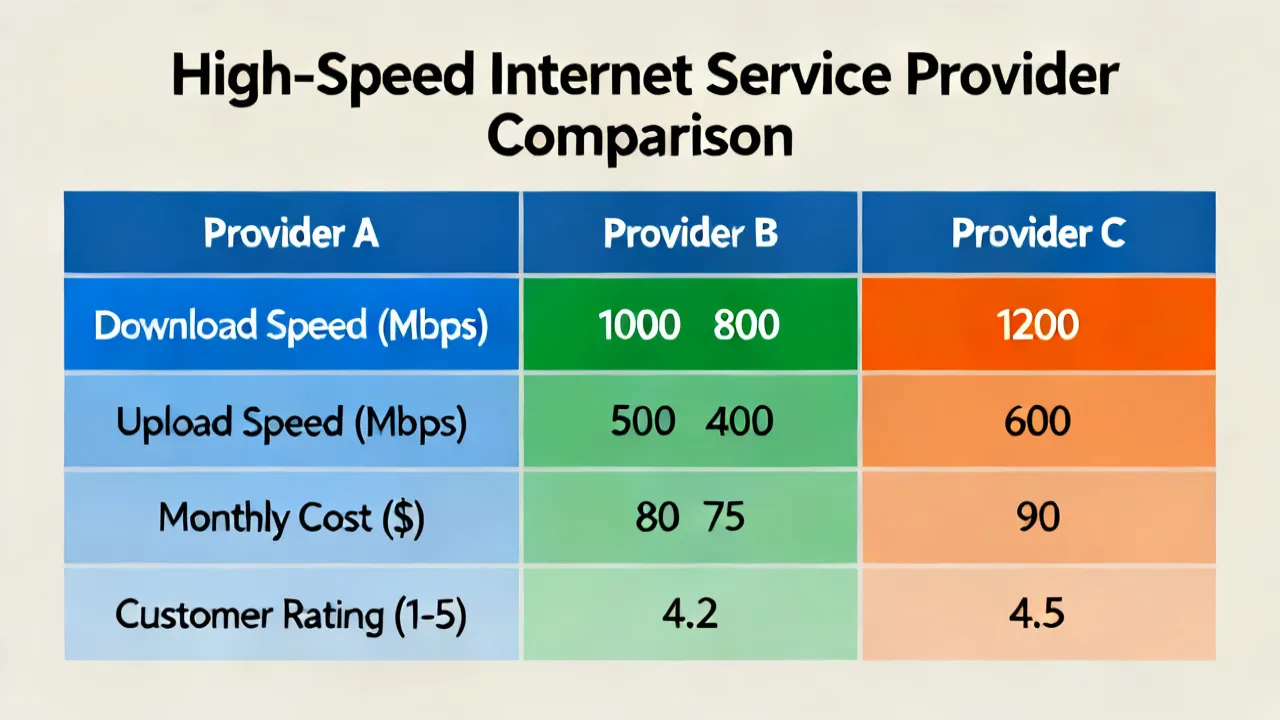
Internet Service Provider Comparison
| Provider | Plan | Price |
|---|---|---|
| Xfinity | Connect: up to 50 Mbps | $19.99/month |
| AT&T Fiber | Fiber Internet 300: 300 Mbps | $55/month |
| Spectrum | Up to 500 Mbps | $50/month |
| T-Mobile 5G Home | 72-245 Mbps | $35-$70/month |
| Astound Broadband | Up to 300 Mbps | $20/month |
| Verizon Fios | 300 Mbps | $49.99/month |
Source: Xfinity, AT&T Fiber, Spectrum, T-Mobile, Astound Broadband, Verizon Fios
Choosing the Right Plan for Your Needs
When selecting an ISP and a plan, several factors should be considered aside from price:
- Usage Requirements: Analyze how many devices in your household will be using the internet and what activities they'll engage in. Streaming services, gaming, and heavy downloading all require higher bandwidth.
- Data Caps: Be aware of any data limits that might apply to your chosen plan. Exceeding these caps can lead to throttled speeds or additional charges.
- Contract Length: Some providers may require a long-term contract, which can be inconvenient if your needs change. Shorter contracts or month-to-month options might offer greater flexibility.
- Installation Fees and Equipment: When factoring the cost, consider any additional installation fees or rental costs for equipment like routers and modems.
- Customer Support: Reliable customer support is essential. Research reviews regarding each provider's customer service reputation.
Low-Cost Internet Access Options
Accessing the internet doesn't need to break the bank. Here are a few strategies to enjoy cost-effective online connectivity:
- Compare Plans: Evaluate different ISPs to find competitive pricing that meets your speed needs. Websites that aggregate ISP offerings can simplify this task.
- Look for Discounts: Many providers offer promotions to new customers, or discounts for bundled services. Don’t hesitate to ask for promotional rates when signing up.
- Consider Basic Packages: If your internet usage is low, consider opting for entry-level plans that provide adequate speeds for browsing or light streaming without overpaying for unnecessary services.
- Negotiate with Providers: Sometimes, contacting your provider about your pricing concerns can lead to discounts. Building rapport with customer support representatives can pay off.
- Utilize Community Programs: Certain local governments and nonprofits partner with ISPs to offer subsidized internet access. These programs can drastically reduce monthly costs for eligible families.
Exploring the Impact of Location on ISP Availability
The availability of specific ISPs often varies significantly by geographic location, influenced by factors such as local infrastructure, population density, and regulatory environment. Urban areas generally offer a wider variety of choices due to dense populations and the resulting competition among ISPs. Conversely, rural regions may have limited options, forcing residents to rely on satellite or less reliable DSL connections.
In addition to availability, speed and pricing can also differ based on location. For instance, some providers may offer promotional rates in specific regions as part of a market penetration strategy. Therefore, it is vital to check not just the pricing but also the availability of high-speed options in your specific area before making a decision.
International Internet Pricing Overview
Understanding global internet pricing can provide context for domestic costs. Here's a breakdown:
| Location | Price Range |
|---|---|
| United States | Approximately $30 - $100+ |
| United Kingdom | Approximately £25 - £60+ |
| Canada | Approximately CAD 50 - CAD 100+ |
| New Zealand | Approximately NZD 60 - NZD 100+ |
| Australia | Approximately AUD 60 - AUD 110+ |
| Singapore | Approximately SGD 30 - SGD 60+ |
Exploring Internet Rights and Consumer Protections
With the rise of the internet as a utility, it is essential to be aware of consumer rights when it comes to internet service. Various regulations aim to protect consumers, and understanding these rights can empower users when navigating the market. The Federal Communications Commission (FCC) in the U.S. has guidelines surrounding transparency in pricing, ensuring that ISPs disclose all associated costs upfront.
Moreover, net neutrality advocates for an open internet, preventing ISPs from prioritizing traffic or creating paid fast lanes for certain content providers. Understanding the current landscape of net neutrality and its potential impacts on consumers is crucial. Being informed about your rights allows you to make more educated decisions when selecting an ISP.
Future Trends in Internet Services
The internet landscape is ever-evolving, with several emerging trends that could shape the future of how we connect:
- 5G Technology: As 5G networks roll out globally, significant improvements in speed and latency will redefine mobile internet access and capability. This technology not only benefits mobile users but also presents solutions for fixed wireless services in underserved areas.
- Increased Adoption of Fiber Optics: Fiber-optic internet is expected to become more widely adopted, potentially lowering costs as infrastructure investments rise. Many ISPs are expanding their fiber offerings, aiming to provide gigabit speeds to more households.
- Smart Home Integration: With the proliferation of IoT (Internet of Things) devices, ISPs may focus on providing enhanced services that cater to smart homes, enabling more automation and better connectivity across devices.
- Sustainable Internet Practices: As the demand for greener technology rises, some ISPs are adopting more sustainable practices, exploring renewable energy sources, and focusing on reducing waste in service delivery.
Final Remarks & Disclaimer
The details provided about internet providers are derived from online resources, accurate as of October 2023. For exact access requirements and methods, always consult the official internet service provider's guidelines. Note that this resource won't be updated in real-time, so check directly with ISPs for the latest information. Additionally, consider each ISP’s terms of service and user agreements, as they include important details regarding your rights and responsibilities as a subscriber.
FAQs
- What should I consider when choosing an ISP? Consider speed requirements, pricing, customer service, and potential data caps. Evaluate your internet usage patterns and preferences before making a choice.
- Are there any hidden fees with ISPs? Always clarify if equipment rentals or additional service fees apply to your plan. Review the terms carefully or ask representatives for detailed explanations of any fees.
- How can I ensure the top home setup for my Wi-Fi? Place your router centrally, reduce physical obstructions, and explore signal boosters if necessary. Networking devices like mesh routers can also enhance coverage in larger homes.
- What are the implications of data caps? Data caps can limit your internet usage considerably. Exceeding your limit may result in slower speeds or added fees, so it’s essential to choose an ISP that suits your expected data consumption.
- How can I improve my internet speed? Regularly reboot your router, ensure that your modem is updated, and disconnect any devices that are no longer in use. If you continue experiencing slow speeds, consult your ISP for troubleshooting assistance.
For further reading, visit the official pages of the ISPs mentioned above for more detailed plan offerings and conditions. For more advanced user needs, research or consult experts who can tailor advice to your specific context. Understanding terms like "Iso Wikipedia" can also help you search more effectively in detailed databases like Wikipedia when researching internet options and technology concepts.
Conclusion: Empowering Users in the Digital Age
As the digital landscape continues to expand and evolve, consumers must be knowledgeable and proactive in selecting their internet service options. Awareness of various ISPs, plans, their implications, and evolving technologies can empower users to make informed decisions. The internet is not just a service—it's a vital utility that underscores how we work, communicate, and entertain ourselves today and in the future.
As individuals continue to adapt to an increasingly digital world, a reliable and suitable internet connection forms the backbone of a modern lifestyle. From streaming high-definition content to engaging in meaningful work remotely, the choice of an ISP can greatly impact daily experiences. By leveraging the insights provided in this guide, consumers can thoughtfully navigate the often overwhelming array of options available, ensuring access to effective and efficient internet services.