Exploring Internet Service Providers
This comprehensive guide provides an overview of leading internet service providers, focusing on pricing, plans, and features. Iso Wikipedia offers an extensive and continually updated resource for various internet options globally. Understanding the nuances across regions and the plethora of options ensures consumers can make informed decisions tailored to their unique needs.

Overview of Internet Service Providers
In today's digital era, reliable internet access is crucial for both personal and professional activities. As our reliance on the internet grows, so does the number of Internet Service Providers (ISPs) offering different types of services. The variety of options can often make the choice of a suitable provider overwhelming. From fiber optic to DSL and cable internet, each technology has its unique characteristics affecting speed, reliability, and overall performance. Websites like Iso Wikipedia offer extensive resources and updates about internet service providers, highlighting varied offerings and assisting consumers in making informed decisions.
The landscape of internet services is continuously evolving, driven by advancements in technology and increasing demand. ISPs invest significantly in infrastructure to expand their reach and improve service efficiency. This competition not only enhances connectivity options but also affects pricing structures, making it important for consumers to stay informed about the latest developments in the market.
The Importance of Internet Speed
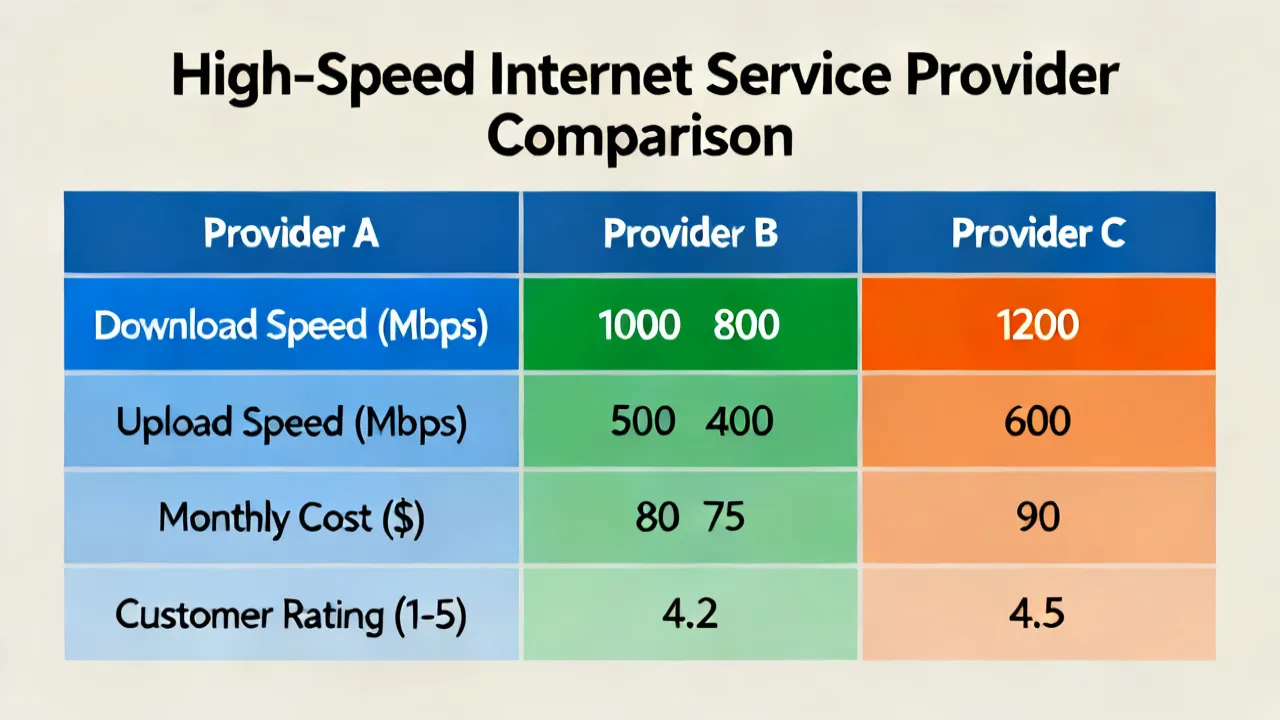
Internet speed is a critical factor when evaluating ISPs. It determines how quickly data is downloaded and uploaded, which impacts everything from simple browsing to high-definition streaming and gaming. Speeds are generally measured in megabits per second (Mbps). Understanding the different speed tiers that ISPs offer can help customers choose a plan that meets their personal or professional needs.
For instance, individuals who primarily check emails and browse social media may find plans offering lower speeds sufficient, while gamers and those who regularly download large files will require significantly higher speeds. ISPs usually provide a range of plans, giving customers the flexibility to select a service that fits their usage patterns. In many cases, fiber-optic connections offer the highest speeds and the most reliable performance available today.
Internet Service Provider Comparison
| Provider | Plan Details | Features & Extras |
|---|---|---|
| Xfinity Internet |
|
No contracts, access to Xfinity Wi-Fi hotspots, optional equipment rental at $14/month |
| AT&T Fiber |
|
Symmetrical speeds, $10/month autopay discount, Wi-Fi gateway included |
| Spectrum Internet |
|
Unlimited data, no contracts, affordable modem, price may increase after the first year |
| T-Mobile 5G Home Internet | $35-$70/month, 72-245 Mbps | 5G technology, suitable for rural areas, discounted for T-Mobile Magenta MAX plan customers |
| Astound Broadband | $20/month, 300 Mbps | Regional availability, two-year price guarantee |
| Verizon Fios |
|
Fiber connection, Wi-Fi router included |
Source from the providers' respective websites, including Xfinity, AT&T Fiber, Spectrum, T-Mobile, Astound Broadband, and Verizon Fios.
Global Internet Costs
Internet pricing varies significantly worldwide. This disparity can be attributed to several factors, including infrastructure investment, government regulation, and market competition. Some countries benefit from advanced technological frameworks and competitive services, while others may still be developing their internet capabilities. Here's a detailed look at costs and availability in different regions:
- United States: $30 - $100+; diverse fiber and broadband options, particularly in urban areas with speeds from 100 Mbps to 1 Gbps. Some rural areas may experience limited options, heavily influencing service quality and pricing.
- United Kingdom: £25 - £60+; fiber or broadband services available, generally offering speeds between 30 and 100 Mbps. The recent expansion of fiber networks has considerably improved overall service.
- Canada: CAD 50 - CAD 100+; a mix of fiber and broadband, speeds from 25 Mbps to 1 Gbps, with significant emphasis on rural connectivity initiatives in recent years.
- New Zealand: NZD 60 - NZD 100+; fiber or VDSL is popular, with speeds often reaching over 100 Mbps. Competition among ISPs has spurred improvements in both speed and pricing.
- Australia: AUD 60 - AUD 110+; increasing access to fiber networks, common speeds between 50 and 100 Mbps. The country has witnessed ongoing debates regarding the National Broadband Network's efficiency.
- Singapore: SGD 30 - SGD 60; high-speed fiber prevalent, up to 1 Gbps due to fierce market competition. The government has heavily invested in digital infrastructure, contributing to Singapore's robust internet capabilities.
Accessing Low-Cost Internet
Low-cost internet access is attainable by exploring entry-level packages from various ISPs. Many companies offer special promotions targeting first-time customers or specific demographics, such as students and low-income families. Consider plans like Xfinity's Connect for $19.99/month or Astound's $20/month package. These introductory offers often provide a method to access digital connectivity without breaking the bank.
Additionally, enrolling in autopay can further reduce costs, such as with AT&T Fiber's $10/month discount for autopayment options. Some governmental and nonprofit initiatives aim to bridge the digital divide, offering subsidies or assistance towards internet costs for eligible households. Comparing plans and providers is essential to maximize value, while remaining aware of potential price increases after promotional periods ends.
The Role of Government Policy in Internet Accessibility
Government policy plays a significant role in shaping the internet service landscape. Regulations can dictate how much competition exists within the market, the investment incentives for ISPs, and, ultimately, the pricing and availability of internet access. In numerous countries, governments are recognizing the importance of providing universal internet access due to the increasing reliance on digital services for education, healthcare, and economic participation.
Programs designed to expand broadband access, particularly in underserved or rural areas, are becoming common. By investing in infrastructure and providing incentives for ISPs to expand their networks, governments aim to ensure that communities have the connectivity they need. This not only promotes equity in technology access but also stimulates local economies by enabling citizens to engage in online work and learning opportunities.
Policies can also address issues such as net neutrality, which ensures that ISPs treat all data equally on the internet, preventing them from throttling or prioritizing certain services over others. This principle is crucial for maintaining a fair and open internet, which benefits users from all walks of life. The ongoing debates surrounding net neutrality highlight the intricate balance of power between consumers, ISPs, and regulatory bodies.
FAQs on Internet Service Providers
- What is Iso Wikipedia? It's an extensive online resource covering numerous global internet services. It aggregates information about ISPs, allowing users to quickly compare offerings, prices, and service quality.
- Should one opt for fiber over DSL? Fiber generally offers higher speeds and more reliable connections, making it suitable for heavy internet use, including activities like streaming, gaming, and large file transfers. DSL can be an adequate choice for basic browsing, but fiber is increasingly becoming the preferred option as availability grows.
- Are bundles worth the investment? Consider bundles if discounted rates outweigh the combined individual service costs. Many ISPs offer bundled services that include internet, cable TV, and phone services, potentially saving customers money. Evaluate your family's needs versus offers; sometimes, getting a bundle might mean paying for services you do not require.
- How can I find the best internet provider in my area? Research local ISPs, their offerings, and customer reviews. Websites and comparison tools can assist in narrowing down the best options based on user feedback and robust performance metrics.
- What should I do if my internet connection is slow? Start by troubleshooting your equipment—check your modem and router setup and examine if you are within an optimal distance for Wi-Fi signals. Also, consider the number of users on your network, and if many are online simultaneously, this could strain bandwidth. If the problem persists, contact your ISP for support as it may be a service-related issue.
- What equipment do I need for internet service? At a minimum, you'll need a modem and potentially a router if you wish to connect multiple devices wirelessly. Many ISPs offer rental equipment for a monthly fee, but purchasing your own can save costs in the long run.
Conclusion
Choosing the right internet service provider is a significant decision that can impact your digital life. With the profound role that internet connectivity plays today, understanding the various options, costs, and key features available is essential. Through careful evaluation of your needs and the offerings from different ISPs, you can enhance your online experience and maximize the value of your subscription.
No matter your geographical location or the specific requirements of your household, staying informed about the latest developments in internet technology and pricing can empower you to make the best decision. Whether you are after high-speed fiber, affordable basic plans, or innovative 5G solutions, there’s likely an ISP tailored to meet your requirements. As the digital landscape continues to evolve, maintaining awareness of your options will ensure that you are equipped to navigate this dynamic environment efficiently.
Disclaimer: The above information is sourced from online resources as of October 2023. Specific requirements and methods for accessing services depend on ISPs' official terms. This website's data won't reflect real-time updates. Such information is intended as a guide, and consumers should verify current offerings directly with the respective ISP websites for the most accurate and updated information.