Pomander Court Rental and Senior Living Guide
This guide explains how to evaluate a Pomander Court rental, compare senior-living resources, and estimate housing costs across English- and French-speaking markets. Pomander Court should be assessed through verified property details, lease terms, accessibility, transport, and nearby services rather than appearance alone. The article also reviews established senior-housing resources, practical affordability strategies, rental-only price ranges, and questions prospective tenants should ask before committing.

Pomander Court: A Practical Rental Perspective
Pomander Court is best approached as a rental decision requiring careful verification rather than as a name that, by itself, confirms a particular building type, service level, or care arrangement. A court-style property may suggest a contained residential setting, but the name does not automatically indicate assisted living, independent senior housing, sheltered accommodation, or a care facility. Prospective tenants should therefore confirm the property’s complete address, landlord or managing agent, tenure, available services, accessibility features, and current rental terms before making a decision.
For older adults, the important question is often not whether a property appears attractive during a short viewing, but whether it will remain practical as daily needs change. A suitable Pomander Court rental should be evaluated through several connected criteria: housing cost, maintenance responsibilities, access to transport, proximity to shops and healthcare, safety, social opportunities, energy efficiency, and the availability of assistance if mobility or health circumstances change. These factors are relevant to any tenant, but they become especially important when the home is being considered as part of a later-life housing plan.
From an industry perspective, senior housing is not one uniform category. Independent living generally supports residents who manage their own daily activities. Assisted living adds help with tasks such as bathing, dressing, medication routines, or meals, depending on local regulation and the provider’s service model. Memory-care accommodation is designed for people with cognitive impairment and typically has additional supervision and environmental controls. A conventional rental such as Pomander Court may offer none of these services. That distinction should be established in writing rather than inferred from a property name, photograph, brochure, or listing description.
The same caution applies to words such as “secure,” “community,” “retirement,” “managed,” and “supported.” These terms can describe useful features, but their precise meaning differs between landlords and jurisdictions. “Managed” may mean that a concierge or building manager is present, or it may simply mean that an external agency collects rent. “Supported” may refer to communal activities rather than personal care. Before signing, the prospective tenant should ask what each term means in operational terms, who provides the service, how often it is available, and whether there is an additional charge.
Key Findings Before Signing a Pomander Court Lease
- Confirm the property identity: Check the complete address, landlord, agent, building status, and whether the advertised unit is actually available.
- Separate rent from care: Determine whether the monthly amount covers accommodation only or includes meals, cleaning, transport, activities, personal care, or emergency response.
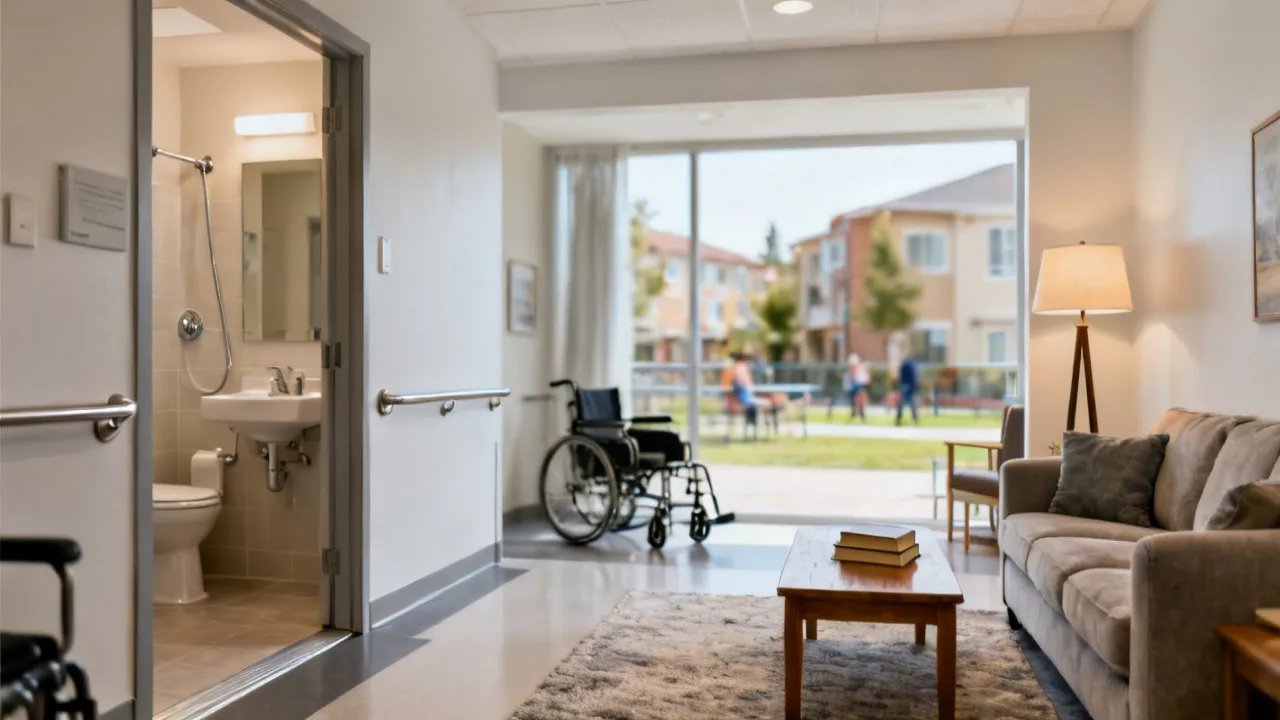
- Review accessibility: Ask about lifts, step-free entry, corridor width, bathroom layout, handrails, lighting, door weight, and emergency arrangements.
- Calculate the full monthly budget: Include utilities, council or local taxes, insurance, internet, transport, service charges, deposits, and possible agency fees.
- Inspect the surrounding area: Measure realistic walking distances to pharmacies, supermarkets, clinics, public transport, parks, and community facilities.
- Use written evidence: Verbal assurances about repairs, adaptations, renewal, or services should be included in the tenancy agreement or a signed schedule.
- Check future flexibility: Find out whether the tenant may add home-care support, install equipment, keep a pet, receive overnight guests, or move to a more supported unit if circumstances change.
- Understand exit costs: Review notice requirements, cleaning obligations, deposit deductions, removal arrangements, and any charges that apply when the tenancy ends.
These checks are more reliable than relying on promotional language. A property may be quiet and well located yet still be unsuitable if it has stairs, poor lighting, expensive service charges, or no practical plan for future support. Conversely, a modest apartment can work well when the layout is accessible, essential services are close by, repairs are handled promptly, and the tenancy terms are clear.
What Is Known—and What Must Be Verified—About Pomander Court
Publicly available information about a property named Pomander Court may vary by location and may not provide a complete picture of a specific unit. It is therefore inappropriate to assume that all buildings or developments using that name share the same ownership, facilities, rental rates, age restrictions, or care provision. A professional assessment should begin with primary documentation from the landlord, managing agent, local authority, or property register where applicable.
The first verification step is to match the listing with a physical location. Request the full postal address, unit number if available, landlord’s legal name, agent’s registration details, and a current floor plan. Search results and property portals can contain outdated advertisements, duplicate listings, or descriptions copied from older marketing material. If a listing does not show a clear address or if the contact person refuses to identify the landlord, the applicant should treat that as a warning sign.
| Area to verify | Questions for the landlord or agent | Why it matters |
|---|---|---|
| Tenancy structure | Is the agreement assured, fixed-term, periodic, leasehold, or another form of occupancy? | The arrangement affects renewal, rent reviews, notice periods, and legal protections. |
| Total housing cost | What is included in rent, and which charges are billed separately? | A low advertised rent can become less affordable after utilities, service charges, or local taxes. |
| Accessibility | Are there lifts, accessible entrances, adapted bathrooms, and safe routes through communal areas? | These features influence independence, safety, and long-term suitability. |
| Repairs | Who handles maintenance, and how are urgent repairs reported outside office hours? | Clear responsibility reduces uncertainty and supports household safety. |
| Support services | Are care, meals, alarms, activities, or welfare checks provided by the property or external organisations? | Tenants need to know whether the property is ordinary rental housing or a supported-living setting. |
| Building management | Who manages communal areas, refuse collection, security, cleaning, and lift maintenance? | Poor management can affect comfort and safety even when the private unit is satisfactory. |
| Future changes | Can the tenant install adaptations or arrange external care at a later stage? | A home that works today may become impractical if support cannot be introduced later. |
If the answer to any major question is unclear, postpone a financial commitment until the information is documented. Tenants should also visit at different times of day. A daytime viewing may not reveal evening noise, poor external lighting, difficult parking, limited bus frequency, or the practical experience of entering the building with shopping or mobility equipment.
It is also sensible to inspect areas that are not always featured in marketing photographs. Look at stairwells, corridors, refuse storage, mailboxes, laundry facilities, visitor parking, entrances, and the route from the pavement to the main door. These spaces often determine whether a building is genuinely convenient. A clean apartment may still be difficult to use if the access route is poorly maintained or if bins and deliveries obstruct shared paths.
How to Assess Affordability
Rental affordability should be examined as a household budget rather than a single monthly figure. Start with reliable income, including pensions, benefits, employment income, savings withdrawals, or family support where applicable. Then identify fixed costs, variable costs, and one-off moving expenses. For an older tenant, medical travel, prescriptions, home-support arrangements, and mobility equipment can materially affect the budget even when rent remains unchanged.
A useful affordability worksheet includes the following categories:
- Monthly rent or occupancy charge.
- Deposit and any permitted administrative or agency charges.
- Electricity, gas, water, heating, and communications.
- Local taxes or municipal charges.
- Contents insurance and optional tenant services.
- Transport to medical appointments, shopping, and social activities.
- Food, household supplies, and personal care.
- Maintenance of mobility aids or other essential equipment.
- Emergency savings for repairs, relocation, or temporary support.
- Seasonal costs, such as heating during winter or cooling during hot weather.
- Potential increases in care, cleaning, gardening, or delivery services.
Housing advisers commonly warn against comparing rent figures without examining these additional costs. Two homes with identical advertised rents may have very different financial outcomes if one requires a car, has high heating costs, or charges separately for communal facilities. Pomander Court should therefore be compared with nearby alternatives on a total-cost basis.
Applicants should distinguish between predictable and uncertain expenses. Rent and council tax may be predictable, while energy bills and support costs may fluctuate. A prudent budget includes a reserve for unexpected increases. This is particularly important where a tenant’s income is fixed or where a family member is contributing financially. The arrangement should be sustainable without depending on temporary discounts, occasional overtime, or informal assistance that may not continue.
Deposit requirements deserve particular attention. Ask how much is required, where it is held, when it may be returned, and which deductions are permitted. Photograph the condition of the property at move-in and keep a signed inventory. This simple record can reduce disputes about decoration, appliances, carpets, fixtures, and cleanliness when the tenancy ends.
Accessibility and Later-Life Suitability
Accessibility is a practical design issue, not merely a specialist concern. A tenant who currently manages stairs may still prefer a property that can accommodate future changes in balance, strength, vision, or endurance. During an inspection, test the route from the entrance to the front door, kitchen, bedroom, bathroom, refuse area, postboxes, and any parking or public transport connection.
Important details include the presence of thresholds, the direction in which doors open, the height of switches, the stability of bathroom surfaces, and the availability of seating in communal areas. A lift is useful only if it is dependable, large enough for mobility equipment, and reached without an unsafe step. Likewise, a ground-floor apartment may not be practical if the entrance has several steps or the bathroom cannot accommodate assistance.
Ask whether adaptations are allowed and who pays for them. Possible changes include grab rails, lever handles, improved lighting, raised toilet seats, shower conversions, visual doorbells, or secure key arrangements. Permission requirements may differ between ordinary rentals and managed retirement housing. Written approval should be obtained before any alteration begins.
Lighting deserves more attention than it often receives. Entryways, corridors, stairs, bathrooms, kitchens, and paths to external doors should be evenly lit without creating strong glare. A tenant with reduced vision may find a polished floor or dark transition between rooms more hazardous than it appears during a brief daytime visit. Ask whether communal lights operate continuously, by timer, or through motion sensors, and whether residents can report failed bulbs.
Bathroom design is often the most important internal consideration. Check whether there is enough space to enter, turn, sit, and receive help if required. Examine the shower floor, bath access, toilet height, sink clearance, storage position, and ventilation. A bathroom that is technically usable may still become difficult if the only bathing option requires stepping over a high wall. It may be possible to adapt the room, but that possibility should be confirmed before the tenancy begins.
Pomander Court and the Difference Between Rental Housing and Senior Living
People often use “senior living” to describe several unrelated housing models. The following distinctions help prevent an expensive misunderstanding:
| Housing model | Typical arrangement | Questions to ask |
|---|---|---|
| Ordinary rental | Private accommodation with standard landlord and tenant responsibilities. | What accessibility changes are allowed, and where can support be obtained? |
| Independent senior housing | Age-oriented accommodation with an emphasis on autonomy, community, and convenience. | Are age conditions, service charges, activities, or emergency systems involved? |
| Sheltered or supported housing | Independent accommodation that may include an alarm, warden, communal space, or scheduled welfare contact. | Is the support available continuously, and what happens outside normal hours? |
| Assisted living | Accommodation combined with varying levels of personal or daily-living support. | Which services are included, assessed, regulated, and charged separately? |
| Memory care | Specialised accommodation for residents requiring cognitive support and supervision. | What clinical oversight, staffing, security, and family communication are provided? |
| Residential nursing or care facility | Accommodation for people whose health or functional needs require substantial ongoing supervision. | Who regulates the service, what staffing is available, and how are care plans reviewed? |
Pomander Court may be appropriate for an independent tenant if its layout and location work well. It should not be presented as a care solution unless the provider clearly confirms that regulated support is available. If a person requires help with medication, transfers, continence, or cognitive safety, an ordinary rental may need to be combined with home-care services or replaced by a more suitable arrangement.
Emergency arrangements should be considered separately from care provision. A building may have an entry intercom or communal alarm without providing personal monitoring. Ask whether an alarm reaches a staffed response centre, a building manager, a relative, or emergency services. Find out how the system is tested, what happens during a power cut, and whether the tenant must pay for installation or monitoring.
Location, Transport, and Daily Independence
A home’s location can determine whether an older tenant remains independent. During the first months of a tenancy, a person may be able to drive or walk long distances. Later, bad weather, reduced confidence, illness, or changes in eyesight may make the same journey difficult. Evaluate the location according to ordinary weekly routines rather than occasional visits.
Map the route to a supermarket, pharmacy, general practitioner or primary-care service, hospital, bank, post office, library, park, community centre, and places where friends or relatives gather. Check whether the route has pavements, benches, crossings, slopes, and adequate lighting. A destination that is one kilometre away on a map may be unsuitable if it requires crossing a busy road or walking up a steep hill.
Public transport should be assessed at the times it is likely to be used. Check weekday and weekend schedules, the distance to the stop, seating availability, step-free boarding, and the reliability of the service. If the property is remote, calculate the cost of taxis or community transport. Family members should avoid assuming that they will always be available to provide lifts, because work, health, and other responsibilities can change.
Social connection is also part of practical suitability. A building with attractive communal facilities is not necessarily socially welcoming, while an ordinary apartment in a familiar neighbourhood may support stronger existing relationships. Ask about resident activities, visitor arrangements, cultural preferences, quiet spaces, and whether communal participation is optional. Privacy and independence should remain possible for residents who do not wish to join organised activities.
Established Resources for Lower-Cost Senior Housing
Finding lower-cost housing usually requires comparing several sources rather than relying on one listing site. In English-speaking markets, organisations such as AARP publish educational material about independent living, assisted living, memory care, and active-adult communities. SeniorLiving.org provides directories and explanatory material covering housing types, amenities, and pricing considerations. The National Senior Citizens Law Center, now associated with broader senior legal advocacy work, is relevant for rights and housing information, while the National Association of Senior Move Managers can help households plan a relocation.
In French-speaking markets, Senioriales focuses on independent residences for retirees, commonly emphasising adapted accommodation, security, community life, and practical services. Retraite Plus provides guidance for families comparing retirement homes and care establishments, including suitable care, temporary accommodation, and specialised cognitive-support settings. FNAQPA offers sector information concerning quality, policy, innovation, and service standards for older adults.
These resources do not all perform the same function. Some are educational, some are directories, some provide legal or quality information, and some represent providers or professional networks. A directory entry is not a quality certification, and a promotional description is not a substitute for a contract, inspection, or regulatory record.
| Resource | Primary usefulness | How to use it when comparing affordability |
|---|---|---|
| AARP | Guides to senior-living models and planning considerations in the United States. | Use the educational material to identify the right category before requesting local prices. |
| SeniorLiving.org | Directory-style information on communities, amenities, and care categories. | Compare several communities, then verify prices and services directly with each operator. |
| National Senior Citizens Law Center | Advocacy and legal information relevant to older adults and housing rights. | Consult rights-based material when examining tenancy protections or disputes. |
| NASMM | Access to move-management professionals who support later-life relocations. | Ask for a written moving plan and a transparent estimate of relocation costs. |
| Senioriales | Independent retirement-residence information in French-speaking markets. | Check the distinction between accommodation charges and optional services. |
| Retraite Plus | Guidance for comparing retirement homes and care establishments. | Use its advice as an initial screening tool, then contact establishments directly. |
| FNAQPA | Sector-level information about quality and improvement in services for older adults. | Use quality information to support due diligence rather than as a price list. |
source: www.aarp.org/caregiving/life-planning/senior-living/
source: www.seniorliving.org
source: www.nsclc.org
source: www.nasmm.org
source: www.senioriales.com
source: www.retraiteplus.fr
source: www.fnaqpa.fr/fr
Step-by-Step: Finding Lower-Cost Senior Living
- Define the required level of independence. Decide whether the household needs ordinary rental housing, independent senior accommodation, sheltered housing, assisted living, memory care, or a temporary arrangement. This prevents comparisons between services that are not equivalent.
- Set a complete monthly budget. Add rent, utilities, taxes, transport, food, personal care, and service charges. Identify a maximum sustainable figure based on dependable income rather than optimistic assumptions.
- Choose acceptable locations. Prioritise areas near healthcare, shops, public transport, family, and community facilities. A slightly higher rent may be financially sensible if it removes regular taxi or car costs.
- Search multiple channels. Review local authority housing portals, nonprofit housing organisations, established directories, retirement-residence providers, estate agents, and community organisations. In French-speaking areas, use French-language search terms such as “résidence services seniors,” “logement senior,” or “maison de retraite,” depending on the required model.
- Check eligibility conditions. Some housing is restricted by age, income, disability status, care needs, residency, or household composition. Request the written criteria before preparing an application.
- Request a full fee schedule. Ask for rent, deposit, service charges, meals, cleaning, alarm systems, activities, transport, care, and exit charges. Ensure recurring and one-off charges are separated.
- Verify regulation and ownership. Confirm who manages the property and which public body regulates any care or support service. A housing operator and a care provider may be different entities.
- Inspect the property. Visit the unit and communal areas. Test entry routes, lifts, bathrooms, lighting, heating controls, windows, and emergency communication systems.
- Speak with current residents where appropriate. Residents can offer useful practical observations about noise, repairs, social atmosphere, transport, and hidden costs, although their views should be treated as supplementary rather than conclusive evidence.
- Read the contract carefully. Review notice periods, rent increases, renewal rights, guest rules, pets, subletting, repairs, adaptations, and the procedure for ending the agreement.
- Plan for changing needs. Ask whether support can be added later, whether a resident would need to relocate if care needs increase, and how family members are informed in an emergency.
- Compare the final shortlist. Rank properties by total cost, accessibility, location, legal clarity, service reliability, and practical suitability. Avoid choosing solely on the lowest headline rent.
When searching online, applicants should keep a record of the date on which each price was viewed. Listings can change quickly, and an advertised amount may apply only to one unit, one promotional period, or a particular contract length. Save the original listing and any emails that describe included services. If the final agreement differs materially from the listing, ask for an explanation before paying a deposit.
Conditions and Requirements to Examine
Lower-cost options may involve conditions that affect eligibility or convenience. Applicants may need to provide proof of identity, income, pension statements, references, medical or support assessments, and evidence of lawful residence where relevant. Some residences use waiting lists, while others allocate units through local authorities or housing associations. The application process may also distinguish between an accommodation application and a care assessment.
Age thresholds vary significantly. An independent retirement residence may accept residents from a stated minimum age, whereas assisted-living facilities may assess functional needs instead. Income-related housing may require evidence that the applicant falls within a specified financial band. These requirements should be obtained directly from the provider or relevant authority because they can change.
Applicants should also examine cancellation and relocation provisions. A deposit may be refundable only under defined circumstances. A service package may continue after a tenant leaves unless notice is served correctly. In a care setting, a move to a higher-support unit may involve a new assessment and contract. These details are particularly important for families arranging housing on behalf of an older relative.
Where a person has a representative, power of attorney, advocate, or family member assisting with the application, the authority of that person should be clear. The intended tenant should receive information in an accessible form and should understand what is being signed. If there are concerns about capacity, coercion, or financial pressure, independent legal or social-care advice may be appropriate before a contract is executed.
Rental-Only Price Ranges by Market
The following figures are indicative rental ranges supplied for comparison purposes. They describe accommodation rent only and do not represent care fees, meals, utilities, taxes, service charges, deposits, or relocation costs. Actual prices depend on property size, neighbourhood, furnishing, local demand, currency movements, and the legal structure of the tenancy.
| Country | City Type | Price Range |
|---|---|---|
| United States | Large cities, such as New York or San Francisco | Approximately USD 2,000–4,000 per month; smaller cities are approximately USD 1,000–2,000. |
| United Kingdom | Large cities, such as London | Approximately GBP 1,500–3,000 per month; smaller cities are approximately GBP 800–1,500. |
| Australia | Large cities, such as Sydney or Melbourne | Approximately AUD 2,000–3,500 per month; smaller cities are approximately AUD 1,200–2,000. |
| Spain | Large cities, such as Madrid or Barcelona | Approximately EUR 800–1,500 per month; smaller towns are approximately EUR 400–800. |
| Peru | Large cities, such as Lima | Approximately PEN 1,500–3,000, or around USD 400–800; smaller towns are approximately PEN 800–1,500, or around USD 200–400. |
| Argentina | Large cities, such as Buenos Aires | Approximately ARS 30,000–60,000, or around USD 300–600; smaller towns are approximately ARS 15,000–30,000, or around USD 150–300. |
| Mexico | Large cities, such as Mexico City | Approximately MXN 10,000–20,000, or around USD 500–1,000; smaller towns are approximately MXN 5,000–10,000, or around USD 250–500. |
| France | Paris | Approximately EUR 1,200–2,500 per month; other cities are approximately EUR 600–1,200. |
| Germany | Large cities, such as Berlin or Munich | Approximately EUR 1,000–2,000 per month. |
The ranges illustrate why location is a central affordability factor. Major metropolitan areas generally carry higher rents, but the lowest-price town is not automatically the best choice. Limited healthcare access, infrequent transport, or distance from relatives may create additional costs and reduce quality of life. For a Pomander Court comparison, the relevant benchmark is the cost of a similarly accessible property in a similarly connected area.
These ranges should also be treated cautiously because rental markets can change rapidly. Inflation, interest rates, housing shortages, construction costs, and local regulation can influence prices. Furnished properties, short-term agreements, and buildings with extensive amenities may sit well above ordinary market rents. Before relying on an estimate, obtain current quotations for comparable units in the same neighbourhood and with similar accessibility.
Comparing English- and French-Speaking Housing Markets
English-speaking and French-speaking markets contain several overlapping housing models, but terminology and regulation differ. In the United States, “assisted living” often refers to a private residential setting with support services, while “independent living” generally focuses on accommodation and community amenities. In the United Kingdom, terms such as retirement housing, sheltered housing, extra-care housing, and care home can carry different legal and operational meanings.
In France, “résidence services seniors” commonly refers to independent accommodation with optional services, while an établissement d’hébergement pour personnes âgées dépendantes, or EHPAD, is a regulated care setting for people requiring substantial support. These categories should not be conflated. A residence offering communal dining and activities may still be unsuitable for a person who needs regular nursing care.
Australia, Spain, Peru, Argentina, and Mexico also have diverse arrangements, from ordinary private rentals to retirement communities and residential care facilities. The availability of formal support, public assistance, and inspection systems can differ by jurisdiction. A family comparing an overseas move should investigate healthcare access, residency rules, language needs, insurance, taxation, and the enforceability of rental agreements in addition to the monthly rent.
International comparisons require particular care with terminology. The same word may refer to a rental arrangement in one country and a care service in another. Applicants should ask for a plain-language description of what a resident receives each day. For example, “meals available” could mean a communal restaurant that must be paid for separately, while “meals included” could mean a mandatory package. “On-site support” might mean a receptionist during office hours rather than a qualified care worker.
How to Compare Providers Objectively
An expert comparison uses consistent questions for every property. Ask each provider to state the base rent, included services, optional services, deposit, contract duration, annual review mechanism, and termination conditions. Then record the answers in a written comparison sheet. This reduces the influence of attractive photography or persuasive sales language.
Quality should be assessed through evidence. Relevant evidence may include a current inspection outcome, licensing information, published complaints procedure, staffing description, maintenance response policy, emergency plan, and accessibility statement. Not every document will be available publicly, but a credible provider should explain where it can be reviewed.
Online reviews may reveal recurring issues, but they should be interpreted carefully. A small number of reviews cannot establish overall performance, and negative comments may concern circumstances unrelated to the property’s ordinary operation. Use reviews to formulate questions, not to replace direct verification.
A comparison matrix can assign each property a score for affordability, accessibility, transport, healthcare proximity, repair reliability, social environment, contract clarity, and future support. The scoring system does not need to be mathematically complex. Its purpose is to ensure that important considerations are not forgotten because of one attractive feature, such as a low rent or a pleasant lounge.
Common Financial Risks
The common mistake is comparing a basic rental with an all-inclusive senior-living package without adjusting for the services involved. A care residence may appear expensive because its fee includes meals, staffing, activities, cleaning, utilities, and personal support. An ordinary flat may appear inexpensive but require separate payments for every practical need. The correct comparison depends on the tenant’s required level of support.
Another risk is underestimating moving costs. These may include professional removal, storage, furniture disposal, cleaning, legal advice, transportation, accessibility alterations, and temporary accommodation. A move manager can help organise these tasks, but the service should be priced in advance and agreed in writing.
Currency conversion is also important for international comparisons. Exchange rates can change, and a figure converted into U.S. dollars may not reflect the local purchasing power of a pension. Families should budget in the currency in which rent is payable and test the budget against plausible exchange-rate changes.
Applicants should be cautious about unusually low prices accompanied by pressure to pay immediately. A landlord who insists on transferring funds before a viewing, refuses to provide a written agreement, or asks for payment through an unusual channel may be operating a scam or may not have authority to let the property. Verify ownership or agency status independently, and do not send sensitive identity documents until the recipient and purpose are reasonably established.
Variable service charges are another potential risk. A landlord may reserve the right to increase communal charges for cleaning, security, heating, or building maintenance. The agreement should explain how increases are calculated and whether tenants receive advance notice. If the charge is estimated, ask for recent statements or an annual budget so the likely cost can be assessed.
Questions to Ask During a Pomander Court Viewing
- What is the exact monthly rent, and when can it be reviewed?
- Which utilities and communal charges are included?
- Is there a lift, and is there a backup plan if it is unavailable?
- Can tenants install rails, alarms, or other accessibility equipment?
- How quickly are urgent and routine repairs handled?
- What are the noise, visitor, pet, and parking rules?
- How close are pharmacies, clinics, supermarkets, bus stops, and green spaces?
- Can home-care workers enter the building easily and safely?
- Are there communal activities, and are participation charges separate?
- What happens if the tenant later needs daily assistance or nursing care?
- What notice is needed to end the tenancy?
- Who holds the deposit, and under what conditions is it returned?
- How are deliveries, rubbish, laundry, and maintenance appointments managed?
- Are there restrictions on installing internet, satellite equipment, or personal security devices?
- What happens during a power failure, severe weather event, fire alarm, or lift breakdown?
If possible, take a trusted relative, friend, occupational therapist, housing adviser, or advocate to the viewing. A second person may notice details that the prospective tenant misses and can help remember answers. However, the older person who will live in the property should remain central to the process. Their preferences, routines, comfort, and sense of control are important parts of suitability.
Making a Decision Without Relying on Assumptions
A sound decision should combine personal needs, documentary evidence, and an in-person assessment. Start by identifying non-negotiable requirements, such as step-free access, a nearby bus route, permission for a care worker to visit, or a maximum total monthly cost. Then rank desirable features, including a garden, communal lounge, parking, a guest room, or proximity to cultural and religious facilities.
For a tenant who values independence, Pomander Court may be a practical option if the home is secure, well connected, and adaptable. For someone needing substantial daily support, a conventional rental may not be sufficient without a carefully arranged care plan. The correct outcome is not the property with the greatest number of advertised features, but the arrangement that matches the tenant’s actual and foreseeable needs.
Families should involve the intended resident in the decision whenever possible. Older adults may prioritise privacy, familiar routines, access to friends, or a nearby place of worship, while relatives may focus on emergency response and medical proximity. A balanced discussion can identify compromises without treating the resident’s preferences as secondary.
It may be helpful to separate the decision into two questions: whether Pomander Court is a suitable home, and whether additional support can be delivered there. A property can be an excellent home but a poor care setting, or it can be accessible yet financially unsustainable. Evaluating these questions separately makes it easier to identify whether the solution is a different property, a revised budget, or a formal care assessment.
Frequently Asked Questions
Is Pomander Court automatically a senior-living residence?
No conclusion should be drawn from the name alone. Confirm whether it is ordinary rental housing, independent retirement accommodation, sheltered housing, assisted living, or another model. The landlord or managing agent should provide the relevant description and contractual documents.
Does rent usually include care services?
Not in ordinary rental housing. Care, meals, cleaning, welfare checks, alarms, and activities may be separate services even when a property is marketed toward older adults. Request an itemised schedule before comparing prices.
What is the first affordability calculation to make?
Calculate the complete monthly cost, not just the advertised rent. Add utilities, taxes, transport, insurance, food, service charges, personal care, and any required support. Then compare that total with reliable monthly income.
Are the price ranges in this guide quotations for Pomander Court?
No. They are broad rental-only comparison ranges for selected markets and city types. They are not a valuation, listing, or confirmed price for Pomander Court.
How can a tenant check accessibility?
Visit the property and test the entire route from the street to the unit. Check steps, thresholds, lifts, bathroom access, lighting, door operation, handrails, and emergency communication. Ask about approved adaptations and obtain permissions in writing.
Which resource is best for finding a lower-cost option?
No single resource is suitable for every situation. AARP and SeniorLiving.org can support initial research in the United States; NASMM can assist with relocation planning; Senioriales and Retraite Plus provide relevant French-language information; and FNAQPA offers sector-level quality material. Local authorities and providers should still verify eligibility, price, and availability.
Should online reviews determine the final choice?
No. Reviews can help identify questions, but they may be incomplete or unrepresentative. Combine them with a viewing, written fees, contract review, regulatory information, and conversations with the provider.
What documents should an applicant request?
Ask for the tenancy or occupancy agreement, full fee schedule, deposit conditions, repair policy, accessibility statement, service descriptions, cancellation rules, and any relevant licensing or inspection information. Keep copies of all correspondence.
Can a cheaper location create hidden expenses?
Yes. A lower rent may be offset by longer journeys, limited transport, higher heating costs, paid care visits, or distance from family. Compare total living costs and practical convenience rather than rent alone.
What should happen if care needs increase?
Ask whether support can be brought into the property, whether the building has an emergency response system, and whether a move to another setting would be required. The answer should be based on the provider’s written policy and the tenant’s likely care requirements.
Can a tenant arrange external home care?
Often this is possible in ordinary rental housing, but building access, visitor registration, insurance, and safeguarding procedures may apply. Confirm whether care workers can enter at all relevant hours and whether keys, fobs, or intercom access can be arranged safely.
What if the property is affordable but not fully accessible?
Ask whether adaptations can be made and obtain a professional assessment if necessary. The cost, approval process, and responsibility for removing adaptations at the end of the tenancy should be understood before signing. If essential changes cannot be made, the property may not be suitable despite its price.
Conclusion
Pomander Court should be evaluated as part of a broader rental and later-life housing comparison. Its suitability depends on verified property facts, transparent costs, accessibility, location, legal terms, and the availability of appropriate support. Established senior-living resources can help explain housing categories and identify providers, but they do not eliminate the need for direct checks.
The strongest approach is systematic: define the required care level, set a complete budget, compare connected locations, inspect properties, verify fees and eligibility, read the agreement, and plan for changing needs. By applying the same criteria to Pomander Court and alternative homes, tenants and families can make a more objective decision based on practical suitability rather than a headline rental figure.
A careful applicant should leave the process with clear answers to five questions: what exactly is being rented, what will it cost in total, can the tenant use it safely, what support can be arranged, and what happens if circumstances change? If those questions cannot be answered, the decision is not yet ready. If they can be answered with reliable written evidence, Pomander Court can be assessed fairly alongside other housing options.
Disclaimer
The information above is compiled from online resources, and the data is stated as of October 2023. Rental prices, eligibility rules, services, regulations, and property availability may change. For the most current and detailed information, please refer to the relevant official website, local authority, landlord, managing agent, or regulated provider.
This article is general housing information and is not legal, financial, medical, care-planning, or property-valuation advice. Tenants should obtain advice suited to their location and circumstances before signing a contract or paying money. Where a person has significant care, health, cognitive, or accessibility needs, consultation with an appropriately qualified professional may be necessary.