Pomander Court Rental and Senior Living Guide
This guide examines Pomander Court as a rental-focused housing option and explains how older adults can assess affordability, accessibility, services, contracts, and nearby amenities. It also compares reputable senior-living information providers serving English- and French-speaking markets, outlines a practical search process, and presents indicative monthly rental ranges. Prices and availability vary by location, property condition, tenancy terms, and the level of support required.

Pomander Court: A Practical Rental Perspective
Pomander Court should be assessed first as a residential rental opportunity rather than assumed to be a care facility. That distinction is important for older renters, families, and advisers comparing independent accommodation with assisted-living or residential-care settings. A rental property may provide privacy, stability, and control over daily routines, while support services, meals, nursing care, and personal assistance may need to be arranged separately.
Because building names can be used by more than one residential development, prospective tenants should verify the exact address, managing agent, tenure, available services, and current listing before making a decision. The name alone does not establish that a property is age-restricted, care-supported, or designed specifically for senior residents. An evidence-based review should therefore begin with the property’s official or agent-issued documentation.
For a retired person seeking a manageable rental home, the very important questions are practical:
- Is the accommodation fully independent, supported, or connected to a care provider?
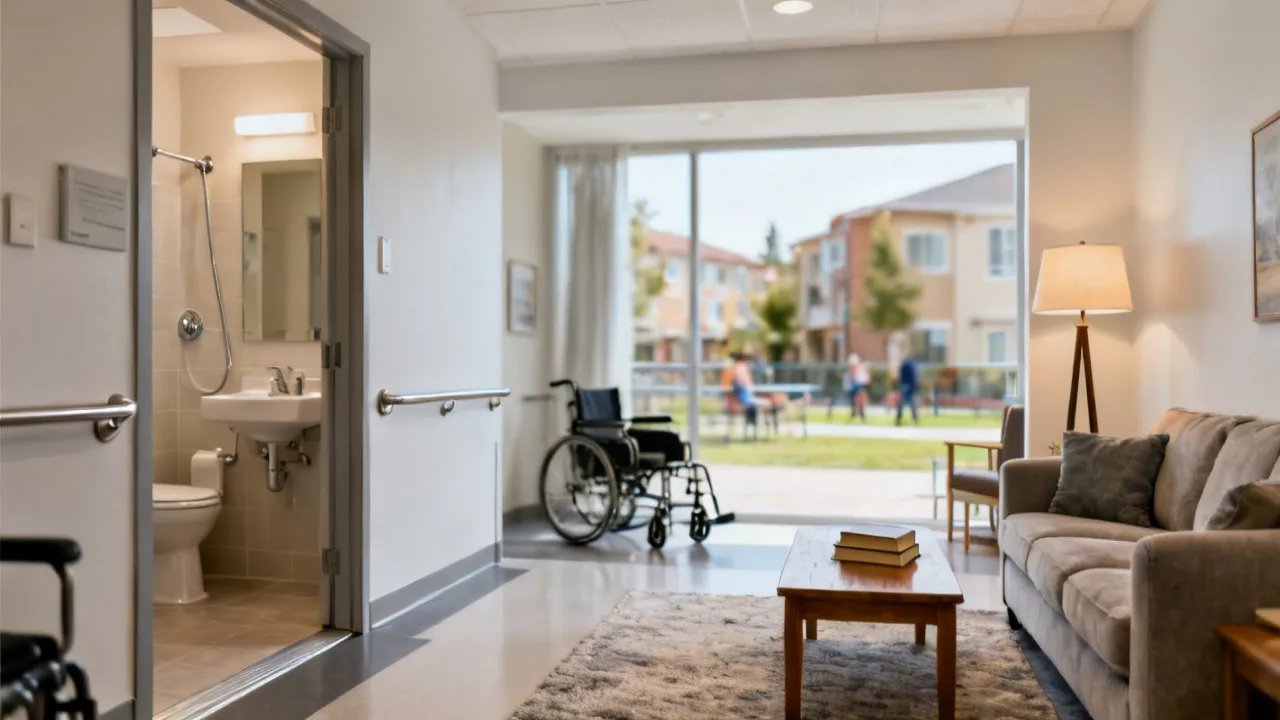
- Are lifts, step-affordable entrances, handrails, accessible bathrooms, and emergency arrangements available?
- What is included in the monthly rent, and which costs are billed separately?
- How close are pharmacies, medical practices, supermarkets, public transport, parks, and community facilities?
- Does the tenancy permit visitors, pets, mobility equipment, or reasonable adaptations?
- What notice period, deposit, guarantor, and affordability checks apply?
From an industry perspective, the strongest rental decision is rarely based on the headline rent alone. A lower monthly figure can become less attractive if it is paired with high service charges, poor insulation, limited transport, or expensive adaptation work. Conversely, a property with a somewhat higher rent may offer better value when it reduces travel, heating, maintenance, and accessibility costs.
The renter’s personal routine should guide the investigation. Someone who cooks every day will evaluate the kitchen differently from someone who relies on delivered meals. A person who attends regular medical appointments may need a direct bus route or a short journey to a clinic. Someone who enjoys gardening, religious services, libraries, or social clubs should consider whether those activities remain realistically accessible after moving. Housing suitability is therefore not only a question of square metres or décor; it is a question of whether the home makes ordinary life practical.
What Pomander Court May Mean for Different Renters
Pomander Court may appeal to several groups, but each group should use a different assessment method. An independent older adult may prioritise location, quiet surroundings, security, and a manageable layout. A family assisting a parent may place greater emphasis on lift reliability, hospital access, building management, and the possibility of future support. A professional relocating for work may focus on commuting, contract flexibility, and furnished or unfurnished options.
| Renter profile | Primary priorities | Documents or checks to request |
|---|---|---|
| Independent older renter | Step-affordable access, transport, local shops, quietness, and predictable monthly costs | Floor plan, tenancy agreement, service-charge schedule, accessibility details |
| Older renter planning for changing needs | Adaptable bathroom, lift access, emergency contacts, and proximity to healthcare | Adaptation policy, building-management plan, repair procedures, local care information |
| Family or representative | Safety, communication with management, visitor arrangements, and good suitability | Landlord identity, compliance certificates, inspection records, contact arrangements |
A viewing should be treated as a short operational audit. Walk from the public entrance to the front door, test the lift route, inspect lighting, listen for traffic or mechanical noise, and check whether a person using a walking frame can turn comfortably in key rooms. If possible, visit at two different times of day. A building that feels peaceful on a weekday afternoon may have different noise, parking, or access conditions in the evening.
Renters should also observe how the building is used by existing residents. Are communal corridors clear? Is mail secure? Do doors close properly? Are signs legible? Is the entrance welcoming but controlled? These observations do not prove that management is good or poor, but they can identify topics for further questions. Speaking politely with residents, where appropriate, may reveal practical information about repairs, noise, heating, or communication that is not visible during a brief agent-led viewing.
Independent Rental Housing Versus Senior-Living Accommodation
Senior living is a broad category. It may include independent-living apartments, retirement communities, assisted living, memory-care settings, and nursing facilities. These models differ in staffing, regulation, pricing, accommodation, and contractual obligations. Pomander Court should not be compared with a care home solely by monthly rent because the services being purchased may be fundamentally different.
| Housing model | Typical arrangement | Questions for comparison |
|---|---|---|
| Standard private rental | Private home with rent and separately arranged services | Can the home be adapted, and are support providers permitted? |
| Independent-living community | Private accommodation with shared facilities or social programming | Are activities, utilities, meals, and transport included or separately charged? |
| Assisted living | Accommodation combined with personal support and varying levels of supervision | How are care needs assessed, reviewed, and priced? |
| Residential or nursing care | Accommodation with substantial daily support and, where applicable, clinical care | Which services are regulated, and what happens if needs increase? |
For an older person who remains independent, a conventional rental near useful services can sometimes provide a more suitable lifestyle than a care-oriented setting. However, this depends on the individual’s mobility, health, social needs, finances, and anticipated support requirements. A housing adviser, occupational therapist, social worker, or regulated care professional can help identify whether independent renting remains appropriate.
The contractual structure is particularly important. Some retirement communities use a lease, licence, purchase arrangement, or service agreement rather than an ordinary residential tenancy. Others may charge an entrance fee, deferred management fee, event fee, or resale-related charge. These arrangements should not be treated as interchangeable with a standard rental. A prospective resident should understand what happens at the end of the agreement, whether fees are refundable, who pays for repairs, and whether a move to higher care is available within the same organisation.
There is also a difference between social contact and formal support. A communal lounge, residents’ activities, or a reception desk may improve wellbeing but does not necessarily provide medication supervision, personal care, or emergency response. Marketing language such as “peace of mind,” “independent senior living,” or “supportive community” should be translated into specific questions about staff presence, hours of operation, and services actually delivered.
Affordability: Look Beyond the Advertised Rent
Monthly rent is only one part of the housing budget. A realistic affordability review should include utilities, council or local taxes where applicable, internet, contents insurance, transport, food, medication, maintenance responsibilities, and any support purchased privately. Older tenants should also consider occasional costs, including moving services, furniture, appliance replacement, and accessibility modifications.
For Pomander Court, request a written schedule of all recurring and one-off charges. The schedule should distinguish between rent, deposit, administration charges where lawful, service charges, utilities, parking, storage, cleaning, and optional services. If the property is within a managed development, ask whether service charges can change during the tenancy and how major works are communicated.
An industry-standard affordability exercise uses three scenarios:
- Base scenario: rent and ordinary household expenses only.
- Pressure scenario: a rise in utilities, transport, or medical spending.
- Support scenario: additional home care, meal delivery, cleaning, or mobility assistance.
This approach is more reliable than deciding on the basis of a single monthly figure. It also helps families discuss whether a property will remain suitable if circumstances change.
A useful budget should distinguish between fixed, variable, and occasional expenditure. Fixed expenditure may include rent, a regular service charge, insurance, and a contracted internet plan. Variable expenditure may include heating, electricity, food, transport, and personal care. Occasional expenditure may include dental treatment, replacement appliances, moving costs, or a contribution toward building works. Recording these categories separately makes it easier to identify which costs are genuinely unavoidable and which might be reduced by choosing a different location or property type.
| Cost category | Examples | Questions to ask |
|---|---|---|
| Housing payment | Rent, deposit, renewal increase, parking, storage | When is payment due, and can the amount change during the tenancy? |
| Building charges | Communal cleaning, lift maintenance, gardens, security, reception | Are these included, capped, or billed separately? |
| Household services | Gas, electricity, water, heating, internet, television | Are utilities metered individually or allocated by the building? |
| Daily support | Cleaning, meals, medication prompts, transport, personal assistance | Can services be purchased independently, and what are their hourly rates? |
Affordability should also account for income reliability. Pension income, benefits, investment returns, and family contributions may arrive on different schedules. A tenant should avoid relying on an informal promise of future assistance when assessing whether rent is sustainable. Where a guarantor is requested, the guarantor should understand the legal commitment and receive a copy of the tenancy terms.
How to Find Lower-Priced Senior Living Options in English- and French-Speaking Markets
Finding a lower-priced option requires a structured search rather than relying on one listing website. The following process can be adapted to the United States, the United Kingdom, Australia, France, and other markets represented by the reference organisations supplied for this guide.
Step 1: Define the required level of independence
Write down what the renter can manage without assistance and what support may be needed. Consider bathing, dressing, cooking, medication management, shopping, transportation, and emergency response. An independent rental should not be presented as a substitute for clinical or personal care when those services are necessary.
Step 2: Separate housing costs from care costs
Ask whether the search concerns rent only or a bundled senior-living package. A rental-only search should compare accommodation, utilities, and building charges. A care-related search must also compare staffing, meals, personal assistance, supervision, clinical services, and assessment procedures.
Step 3: Use established information organisations
Begin with organisations that explain housing models, care categories, eligibility, and consumer rights. A directory can help identify providers, but its listings should be verified directly. Check the date of the information, geographic coverage, ownership, and whether a provider pays for placement or advertising.
Step 4: Contact local public agencies
Municipal housing offices, local councils, ageing services, social-care departments, and public health agencies may know about subsidised housing, rent-assistance programmes, accessible housing registers, or community support. Eligibility often depends on income, assets, age, disability, residency, household size, and local rules.
Step 5: Search by location radius
Instead of searching only for a named development, create a radius around the preferred neighbourhood. Include nearby districts with access to the same transport routes, healthcare facilities, shopping streets, and community centres. This strategy may reveal smaller developments or ordinary rentals with better value than highly marketed senior-living properties.
Step 6: Compare total monthly expenditure
Use a written comparison that includes rent, service charges, utilities, transport, food, insurance, care, and likely adaptation costs. The low price advertised accommodation may not be the least expensive overall if it requires regular taxis, extensive heating, or private support.
Step 7: Confirm legal and building standards
Ask for the tenancy terms, deposit rules, repair obligations, energy information, fire-safety arrangements, and any building restrictions. In a multi-unit development, verify whether lifts and communal facilities are managed by the landlord, a residents’ association, or a separate agent.
Step 8: Inspect accessibility in person
Measurements matter. Check thresholds, corridor width, bathroom entry, kitchen work surfaces, lighting, stair configuration, lift dimensions, door closers, and the route to refuse storage or laundry facilities. An occupational therapist can assess whether a home is suitable for present and anticipated mobility needs.
Step 9: Review support and emergency arrangements
Ask who responds to repairs, what happens during a lift outage, whether there is a reception desk, and how emergency services access the building. Do not assume that a property described as secure provides personal emergency monitoring or welfare checks.
Step 10: Obtain independent advice before signing
A housing solicitor, tenant adviser, senior move manager, or local advocacy organisation can explain contractual risks. Families should also clarify who is authorised to communicate with the landlord if the tenant later needs assistance with administration.
Step 11: Keep a written search record
Record the address, landlord, monthly cost, deposit, viewing date, accessibility observations, questions asked, and answers received. This prevents different properties from becoming confused and makes it easier to identify inconsistencies. Written records are also useful if a family member, adviser, or care professional joins the decision later.
Step 12: Verify availability immediately before applying
Listings can remain online after a property has been reserved or let. Confirm the availability date, whether the advertised price is still valid, and whether any incentives are conditional on a particular tenancy length. Ask for a current application pack rather than relying on an old advertisement.
Comparison of Senior-Living Information Websites
The organisations below serve different purposes. AARP provides broad educational material for older adults in the United States. SeniorLiving.org functions as a directory and information resource. The National Senior Citizens Law Center is associated with senior-rights advocacy and legal information, while the National Association of Senior Move Managers connects consumers with professionals who assist with relocation. The French-language resources have different roles: Senioriales focuses on independent retirement residences, Retraite Plus assists families in evaluating care establishments, and FNAQPA represents quality and improvement interests within the ageing-services sector.
These websites should be viewed as starting points rather than automatic endorsements. A listing, article, or provider profile does not replace a direct inspection, a contract review, or confirmation of current pricing and availability.
| Website or organisation | Main function | How it may help with a lower-priced search |
|---|---|---|
| AARP | Guides covering independent living, assisted living, memory care, and active-adult communities | Helps readers understand housing categories and compare care requirements before contacting providers |
| SeniorLiving.org | Directory-style information on communities, amenities, pricing, and care types | Supports initial market comparison and identification of locations to investigate further |
| National Senior Citizens Law Center | Advocacy and legal information concerning older adults and housing-related rights | May help renters understand rights, public policy, and possible legal support channels |
| National Association of Senior Move Managers | Directory of professionals assisting with downsizing, relocation, and transitions | Can help control moving complexity and identify practical relocation support |
| Senioriales | Independent residences designed for retired people in France | Provides a reference point for comparing independent retirement accommodation and services |
| Retraite Plus | Guidance for families searching for retirement homes and care establishments | Offers orientation on different forms of accommodation and care needs |
| FNAQPA | Information on quality, policy, and innovation in services for older people | Provides sector context for judging provider standards and service quality |
source: www.aarp.org
source: www.seniorliving.org
source: www.nsclc.org
source: www.nasmm.org
source: www.senioriales.com
source: www.retraiteplus.fr
source: www.fnaqpa.fr
Conditions and Requirements to Check
Eligibility rules differ considerably between ordinary private rentals, public housing, retirement residences, and care establishments. Before applying, prepare a clear file containing identity documents, proof of income, pension statements, references, contact information, and any documents required to demonstrate disability or care needs. Requirements should be confirmed with the landlord or relevant authority because they can change.
| Area | Typical requirement | Practical action |
|---|---|---|
| Financial assessment | Income evidence, deposit, rent affordability, or benefits information | Ask which income sources are accepted and whether a guarantor is required |
| Age or care eligibility | Minimum age, disability assessment, or care-needs evaluation in some schemes | Obtain written eligibility criteria before submitting an application |
| Tenancy conditions | Notice period, permitted occupants, pets, alterations, and maintenance duties | Read every clause and request clarification in writing |
| Accessibility | Building design may support some needs but not all mobility limitations | Measure the route and obtain professional advice where required |
In many jurisdictions, older people may have access to public benefits, housing assistance, disability-related support, or local social-care assessments. The availability and amount of assistance depend on legislation and personal circumstances. Readers should consult the relevant public authority rather than relying on general online claims.
Applicants should ask whether an application is for a particular apartment or for a waiting list. A waiting-list position may not guarantee a specific floor, orientation, level of accessibility, or move-in date. If the accommodation is age-restricted, clarify whether the restriction applies to all occupants, only the primary tenant, or the household as a whole. Where a couple is applying, ask what happens if one partner later needs a higher level of care.
Language and communication requirements may also matter. If documents are supplied in English or French but the applicant prefers another language, request assistance before signing. A trusted representative may help interpret practical information, but the tenant should understand the financial and legal obligations personally wherever possible.
Indicative Rental Ranges in Selected English- and French-Speaking Markets
The following figures are the supplied indicative ranges for rental costs only. They are not quotations for Pomander Court, senior-living fees, care packages, utilities, deposits, or service charges. Currency values are retained as provided, and actual rents can vary significantly by district, property size, furnishing, lease length, accessibility, and market conditions.
| Country | City Type | Price Range |
|---|---|---|
| United States | Large metropolitan areas | Approximately US$2,000–US$4,000 per month |
| United States | Smaller urban areas | Approximately US$1,000–US$2,000 per month |
| United Kingdom | Large metropolitan areas, including London | Approximately £1,500–£3,000 per month |
| United Kingdom | Smaller urban areas | Approximately £800–£1,500 per month |
| Australia | Large metropolitan areas, including Sydney and Melbourne | Approximately AUD 2,000–AUD 3,500 per month |
| Australia | Smaller urban areas | Approximately AUD 1,200–AUD 2,000 per month |
| Spain | Large metropolitan areas, including Madrid and Barcelona | Approximately €800–€1,500 per month |
| Spain | Smaller towns | Approximately €400–€800 per month |
| Peru | Large metropolitan areas, including Lima | Approximately PEN 1,500–PEN 3,000, or about US$400–US$800, per month |
| Peru | Smaller towns | Approximately PEN 800–PEN 1,500, or about US$200–US$400, per month |
| Argentina | Large metropolitan areas, including Buenos Aires | Approximately ARS 30,000–ARS 60,000, or about US$300–US$600, per month |
| Argentina | Smaller towns | Approximately ARS 15,000–ARS 30,000, or about US$150–US$300, per month |
| Mexico | Large metropolitan areas, including Mexico City | Approximately MXN 10,000–MXN 20,000, or about US$500–US$1,000, per month |
| Mexico | Smaller towns | Approximately MXN 5,000–MXN 10,000, or about US$250–US$500, per month |
| France | Paris | Approximately €1,200–€2,500 per month |
| France | Other urban areas | Approximately €600–€1,200 per month |
| Germany | Large metropolitan areas, including Berlin and Munich | Approximately €1,000–€2,000 per month |
These ranges should be used only as an initial screening tool. The supplied list covers markets where English or French may be widely used, as well as countries included for comparison. It does not establish that every listed provider operates in every market. In addition, currency conversions can change, and nominal figures from different dates should not be treated as directly equivalent.
Comparisons between countries require particular care. A rental figure may exclude utilities in one market but include some building costs in another. Some locations require substantial deposits, while others involve insurance or guarantor arrangements. Local tenancy law, inflation, exchange rates, taxation, and availability can alter the practical meaning of a nominal price. A lower figure in a smaller town may also come with fewer specialist medical services or less frequent public transport.
How to Compare Pomander Court With Alternatives
A useful comparison sheet should score each option against the same criteria. Experts commonly recommend separating objective facts from personal preferences. For example, “lift available” is a factual item, while “pleasant atmosphere” is a subjective impression that should be tested through several visits and conversations.
| Comparison category | Evidence to collect | Why it matters |
|---|---|---|
| Location | Walking distances, transport routes, healthcare access, local amenities | Reduces dependence on costly or difficult travel |
| Building access | Entrance design, lift dimensions, corridors, lighting, handrails | Supports mobility and reduces avoidable barriers |
| Financial structure | Rent, deposit, service charges, utilities, insurance, renewal terms | Shows the actual recurring commitment |
| Management quality | Repair response, communication, maintenance records, resident feedback | Indicates how daily problems are likely to be handled |
| Future suitability | Adaptation rules, care-provider access, visitor policy, tenancy flexibility | Helps avoid another disruptive move if needs change |
Pomander Court may be attractive if its setting, layout, and management arrangements align with the renter’s needs. Yet a well-presented building is not automatically a suitable senior-living choice. The correct question is whether the property supports a safe, sustainable routine at a total cost the tenant can maintain.
Alternatives should include more than other properties carrying a “senior” label. A ground-floor apartment in an ordinary building, a sheltered housing scheme, a smaller home near a high street, or a property close to relatives may meet the same practical objectives. The search should focus on outcomes: safety, independence, affordability, social connection, and access to help.
Accessibility and Safety Review
Accessibility should be evaluated at the building, apartment, and neighbourhood levels. At the building entrance, inspect kerbs, ramps, door weight, intercom height, lighting, and weather protection. Inside the building, check the lift, stairwell, corridor width, flooring, signage, and emergency lighting. Within the apartment, examine bathroom layout, shower access, bedroom clearance, kitchen storage, window operation, and heating controls.
Safety also includes less visible factors. Ask how repairs are reported, whether smoke alarms are maintained, where emergency information is displayed, and how residents are informed about planned works. A tenant who lives alone may want to discuss a personal alarm or welfare-check arrangement with an appropriate provider. Such services should be verified separately and should not be assumed to form part of the rental package.
Neighbourhood design matters as much as internal design. A nearby supermarket, pharmacy, bus stop, library, park, or community centre may contribute substantially to independence. Pavement quality, crossing times, slopes, street lighting, and seating can affect whether an older adult feels confident going outside. A viewing should therefore extend beyond the front door.
Bathrooms deserve special attention because they often become difficult before other parts of a home. Check whether there is a level-access shower, space beside the toilet, a stable place to sit, and enough room for assistance if needed later. A small bathroom may be attractive in photographs but impossible to use safely with a frame or carer. Ask whether grab rails can be installed and whether the landlord has an approved contractor or adaptation process.
Kitchen design also affects independence. Look at the height of worktops, the position of frequently used cupboards, the weight of appliance doors, and the distance between the refrigerator, sink, and cooking area. Poor lighting or slippery flooring can create unnecessary risks. A renter who does not currently use mobility equipment may still benefit from choosing a home that permits safe movement if balance or strength changes.
Tenancy and Consumer Considerations
Before signing for Pomander Court or another rental home, confirm the identity of the landlord or authorised agent. Read clauses concerning rent reviews, repairs, subletting, guests, pets, alterations, early termination, and deposit protection. If the property is furnished, request an inventory and photograph existing condition. If it is unfurnished, calculate the cost and effort of furnishing it safely.
Never rely solely on verbal assurances about accessibility, promised repairs, included services, or future availability. Ask for commitments in writing. If an agent pressures an applicant to transfer money before viewing or before receiving clear contractual information, seek independent advice and verify the legitimacy of the listing.
Older tenants should also consider digital access. Essential notices may be delivered through an online portal, but not every resident will find that convenient. Ask whether paper communication, telephone contact, or an in-person office is available. Clear communication can be particularly important when a tenant has hearing, vision, memory, or language-related needs.
Check who is responsible for repairs inside the property and how quickly urgent problems are addressed. A broken heating system, failed lift, leaking bathroom, or insecure entrance can have a much greater impact on an older person than on a younger tenant with more physical flexibility and alternative transport. Ask whether there is an out-of-hours number and whether emergency repair costs can ever be passed to the tenant.
Insurance should be clarified as well. The building owner may insure the structure, but the tenant may need contents insurance and personal liability cover. If mobility equipment, specialist furniture, or expensive medical devices will be kept in the property, confirm that the relevant policy covers them. A tenant should not assume that the building’s insurance protects personal possessions.
Questions to Ask the Landlord or Managing Agent
Preparing questions in advance makes a viewing more productive. The following list can be adapted to the exact property:
- Who legally owns and manages the property?
- What is the full monthly payment, including every mandatory charge?
- Which utilities are included, and how are shared costs calculated?
- How often has the rent changed in recent years?
- What is the repair procedure during evenings, weekends, or public holidays?
- How frequently are communal areas, lifts, alarms, and fire-safety systems inspected?
- Are external carers, cleaners, meal-delivery providers, or family support workers permitted?
- Can grab rails, a shower seat, ramps, or other reasonable adaptations be installed?
- Are pets, overnight guests, or live-in carers permitted?
- What happens if the lift is out of service?
- Is parking available for residents, visitors, or community transport?
- Are there restrictions on using mobility scooters or storing bicycles and equipment?
The quality of the answers can be as informative as the answers themselves. A professional agent should be able to identify which matters require confirmation from the landlord or building manager. Vague claims such as “it should be fine” should lead to a written follow-up rather than an assumption.
Moving to Pomander Court
A carefully planned move can reduce stress and avoid unnecessary expenditure. Begin by measuring the new apartment and identifying essential furniture. Prioritise stable seating, clear walking routes, adequate lighting, and easily reached storage. Avoid filling corridors or placing loose rugs in areas used by mobility aids.
A senior move manager may help with sorting, packing, transport, installation, and the disposal or donation of unwanted possessions. The National Association of Senior Move Managers provides a starting point for locating relevant professionals in its service area. Obtain written quotations and clarify what is included, such as packing materials, insurance, furniture assembly, and removal of items.
Before moving day, arrange utility transfers, address changes, medication deliveries, healthcare records, transport, and emergency contacts. Introduce yourself to building management and learn the location of refuse areas, mailboxes, laundry facilities, fire exits, and communal spaces. If a family member or representative will assist with administration, agree on communication responsibilities in advance.
Downsizing should be approached gradually rather than as a single emotional event. Separate essential possessions, items to be stored, items to be donated, and items requiring family discussion. Measure doorways and lifts before arranging delivery of large furniture. If a bed, recliner, mobility scooter, or other bulky item is essential, confirm that it can enter the building and fit within the apartment.
The first weeks after moving are an opportunity to test practical assumptions. Note how long it takes to reach shops, whether the heating is adequate, how quickly management responds, and whether the apartment remains comfortable at different times of day. Small issues should be reported promptly and recorded. Early documentation can help distinguish ordinary settling-in matters from recurring management problems.
Recognising Potential Rental Scams
Older renters and families should take particular care when responding to online advertisements. A legitimate listing should provide enough information to identify the property and arrange a normal viewing process. Warning signs include demands for immediate payment, refusal to provide a full address, pressure to use an unusual payment method, inconsistent landlord details, or claims that the owner is overseas and cannot show the property.
Do not send identity documents, bank information, or benefit details until the recipient and purpose have been verified. A deposit should be paid only under the terms of a legitimate agreement and through a traceable method appropriate to the jurisdiction. Families helping from a distance should ensure that the person receiving keys has independently confirmed the property, agent, and contract.
Photos can also be misleading. Images may be old, digitally altered, or taken from another property. Compare the photographs with the floor plan and inspect fixed features such as windows, radiators, balconies, lifts, and views. If the layout or accessibility description changes between the advertisement and the viewing, pause the application until the discrepancy is explained.
Professional Assessment: What Represents Good Value?
From an expert housing perspective, value is a relationship between cost, functionality, reliability, and future resilience. A suitable home should support everyday activities without demanding disproportionate effort or expense. The assessment should include the tenant’s current routine and a reasonable range of future scenarios.
For example, a flat near a pharmacy and bus route may be more sustainable than a cheaper property in an isolated area. A building with a reliable lift may be preferable to a larger apartment reached by stairs. A landlord who responds promptly to maintenance issues may provide greater practical value than an agent offering a lower initial rent but weak ongoing support.
That analysis does not mean that every older renter needs specialist accommodation. Many people remain comfortable in ordinary private rentals, particularly where the home is accessible and community support is available. The right choice depends on personal circumstances, not age alone.
Good value also includes emotional and social sustainability. A property that feels secure but isolating may not support wellbeing over time. Conversely, a development with modest facilities may be valuable if it is close to friends, relatives, faith communities, clubs, and familiar services. The tenant’s preferences should be treated as legitimate housing requirements rather than optional extras.
A Simple Decision Framework
After viewing several options, use a structured decision framework. First, identify non-negotiable requirements, such as no internal stairs, a maximum affordable payment, permission for a pet, or a specified distance from healthcare. Second, identify desirable features, such as a balcony, communal garden, parking, or furnished accommodation. Third, list concerns that require written clarification.
One practical approach is to score each property from one to five for cost, accessibility, location, management, comfort, social connection, and future suitability. The scores should not replace professional judgement, but they can expose an attractive feature that is masking a serious weakness. A property that receives a high overall score but fails a non-negotiable requirement should normally be excluded.
| Decision factor | Example of a strong result | Example of a concern |
|---|---|---|
| Affordability | Total monthly costs remain manageable under a pressure scenario | The rent is affordable only if uncertain family support continues |
| Accessibility | Step-free route, suitable bathroom, and permission for adaptations | Lift access exists but the apartment entrance has a narrow threshold |
| Location | Shops, pharmacy, transport, and healthcare are accessible without a car | Essential services require taxis or a long, uneven walk |
| Future suitability | External carers are permitted and management has clear procedures | The agreement restricts visitors or does not address changing needs |
Frequently Asked Questions
Is Pomander Court specifically a senior-living residence?
The name alone does not establish that status. Prospective renters should confirm the official property description, age restrictions, management arrangements, and whether care or support services are included. If the development is a standard rental building, it should be compared with other independent homes rather than with fully staffed care facilities.
Does the rent include care or personal assistance?
Do not assume that care is included. Request a written breakdown of rent, service charges, meals, cleaning, transport, personal assistance, nursing, emergency monitoring, and optional services. In a conventional rental, these services are normally separate arrangements.
How can an older renter reduce monthly housing expenditure?
Compare a wider radius, consider smaller or less central locations with reliable transport, review furnished and unfurnished options, negotiate a longer tenancy where appropriate, and calculate total living costs rather than rent alone. Public housing agencies and senior-support organisations may also explain eligibility-based assistance.
What should be checked during a viewing?
Inspect the entrance, lift, stairs, corridors, bathroom, kitchen, heating controls, storage, windows, lighting, noise, and outdoor route. Test whether the space works with a walking frame or other mobility equipment if relevant. Visit at more than one time of day when possible.
Are the rental ranges in this guide current quotations?
No. They are indicative ranges supplied for comparison and apply to rental costs only. They do not represent an offer for Pomander Court or any other named property. Current figures should be confirmed through local agents, landlords, public housing bodies, and official provider websites.
Which organisation should a family contact first?
The appropriate starting point depends on the question. AARP and SeniorLiving.org can help explain senior-living categories and identify possibilities in the United States. Retraite Plus can assist with orientation among French retirement and care options. FNAQPA provides sector and quality context, while a local authority or tenant-rights service may be top for eligibility and legal questions.
Can a rental be adapted for reduced mobility?
Possibly, but permission and funding rules vary. Ask the landlord about grab rails, shower adaptations, ramps, door modifications, and flooring. Some changes may require written consent, professional assessment, or approval from a local authority. Obtain permission before altering the property.
What if care needs increase after moving in?
Review the tenancy, adaptation policy, visitor rules, and access arrangements for external care workers. Contact a health or social-care professional for an assessment. If the property cannot safely support changing needs, a planned move may be necessary, making future suitability an important part of the initial decision.
Is a cheaper property always the better financial choice?
No. A low rent may be offset by high heating costs, transport expenses, adaptation work, or private support. Compare the total cost of living in the property and consider whether the location allows the tenant to maintain independence without frequent paid assistance.
Should a family member attend the viewing?
Where possible, a second person can notice details the prospective tenant misses and help record answers. However, the older renter’s preferences should remain central. A family member should support informed decision-making rather than assume that a particular housing model is appropriate solely because of the tenant’s age.
Conclusion
Pomander Court can be evaluated thoughtfully as a rental option by examining its verified location, layout, accessibility, management, contract, and full monthly cost. The very reliable search combines property-level evidence with guidance from established senior-living and ageing-services organisations. Whether the preferred solution is an independent apartment, a retirement residence, or a care setting, the decision should reflect actual support needs and sustainable finances.
Use the supplied rental ranges as broad orientation only. Compare like with like, confirm every charge in writing, inspect the property carefully, and consult official or professional sources before committing to a tenancy or care arrangement.
The most defensible decision is one that remains workable beyond the first month. It should account for transport, repairs, health changes, social contact, household administration, and the possibility of needing assistance later. A property does not need to provide every service itself, but the tenant should know how necessary services will be obtained, paid for, and coordinated.
Disclaimer
1. The information above is compiled from online resources, and the data is stated as of October 2023. Rental markets, eligibility requirements, services, and regulations may have changed since that date.
2. For more information, please refer to the relevant official website, public authority, landlord, managing agent, or regulated professional. Verify current prices, availability, legal conditions, and service descriptions directly before making a decision.
3. The discussion of Pomander Court is general and does not confirm the characteristics of any particular building without an exact address and current documentation. Readers should not infer that the property is age-restricted, accessible, supported, or affiliated with a care provider unless those facts are independently confirmed.
4. Rental and care decisions can have significant financial, legal, health, and personal consequences. A housing adviser, tenant-rights organisation, occupational therapist, social-care professional, solicitor, or other qualified adviser may be appropriate depending on the circumstances.