Pomander Court Rental and Low-Cost Senior Living Guide
This guide explains how to evaluate Pomander Court as a rental option while comparing practical ways to locate lower-cost senior housing in English- and French-speaking markets. It covers affordability, lease terms, accessibility, services, official information sources, relocation planning, and indicative monthly rental ranges. Pomander Court is treated as a named rental property whose address, facilities, and current pricing should be confirmed directly with its official management or listing representative.

Executive Overview
Pomander Court should be assessed as a rental residence rather than assumed to be a care facility, retirement community, or assisted-living provider. The property name alone does not establish its legal classification, staffing arrangements, age restrictions, or suitability for an older adult. The first step is therefore to verify the exact location, landlord or managing agent, available unit types, monthly rent, deposit, included utilities, accessibility features, and whether any support services are delivered on site.
For households seeking a lower-cost senior-living arrangement, the strongest strategy is usually a structured comparison of independent rental housing, age-restricted communities, supported housing, assisted living, and residential care. These categories can look similar in advertisements but differ significantly in staffing, medical support, tenancy rights, meals, transportation, emergency response, privacy, and total monthly expenditure. An industry adviser would recommend comparing the complete housing package rather than simply selecting the lowest advertised rent.
This article provides a practical framework for reviewing Pomander Court, describes reputable information sources in English- and French-speaking markets, identifies questions to ask before signing a contract, and summarizes indicative rental ranges supplied for selected countries. The figures are rental estimates only. They do not represent the complete price of assisted living, nursing care, meals, housekeeping, insurance, utilities, transportation, personal-care visits, or other services.
Understanding Pomander Court as a Rental Option
When evaluating Pomander Court, begin with the property’s legal and operational identity. Some named residences are conventional apartment buildings, while others are senior-oriented rental communities with communal facilities and optional support. Still others may be part of a larger housing development in which the name refers to a building, court, block, or residential cluster. Before making a decision, prospective tenants should obtain written information from the landlord, housing association, property manager, or verified letting representative.
The property should be investigated through more than one source. A listing website may describe an apartment as “senior-friendly,” but that phrase may refer only to its quiet location or the age of its residents. A brochure may mention “support,” although the actual service may consist of a reception desk, scheduled social activities, or an emergency telephone rather than personal care. A reliable assessment should rely on the tenancy agreement, service schedule, property rules, inspection reports where applicable, and direct communication with the responsible operator.
The following questions can establish what Pomander Court actually provides:
- Is Pomander Court an ordinary private rental property, age-restricted housing, independent senior housing, supported housing, or a care setting?
- What is the exact address, and which transport links, shops, pharmacies, clinics, and community services are nearby?
- Are apartments self-contained, and do they include a private kitchen, bathroom, entrance, and storage area?
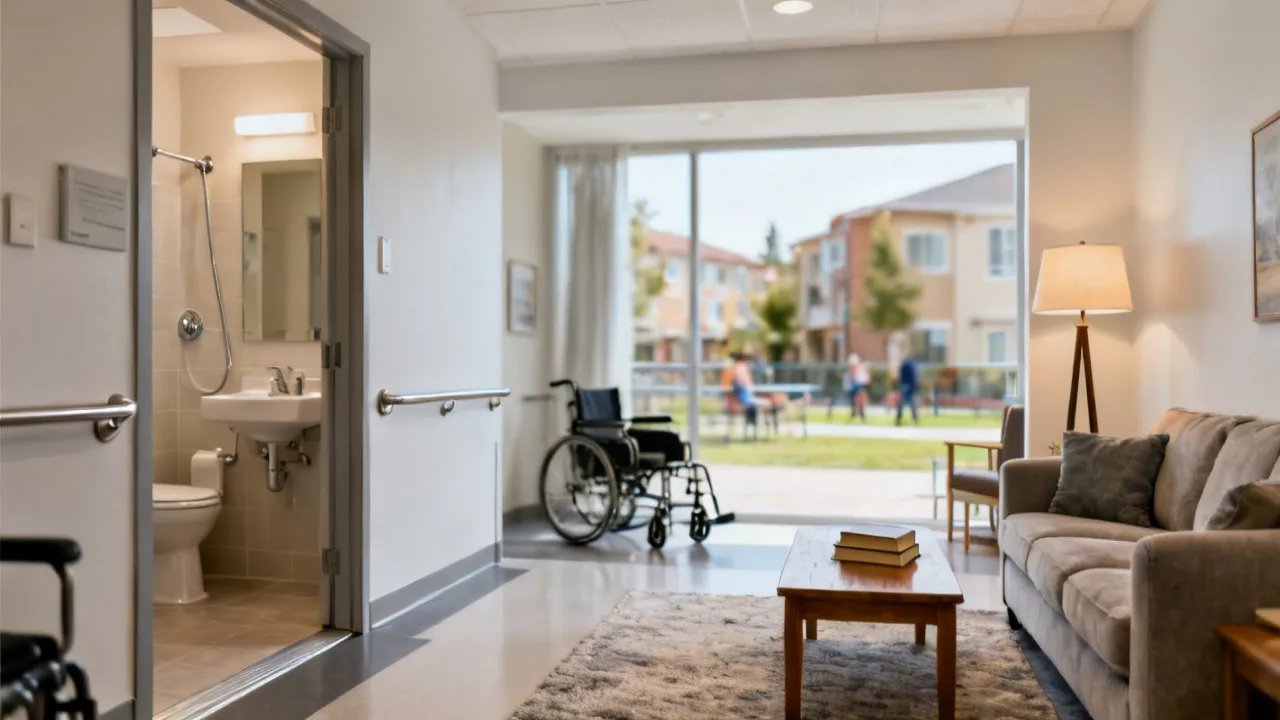
- Are lifts, handrails, level thresholds, accessible bathrooms, emergency call systems, and well-lit communal routes available?
- Does the monthly rent include water, heating, electricity, internet, maintenance, security, or communal-area charges?
- Are meals, cleaning, laundry, activities, transport, welfare checks, or personal-care services included or charged separately?
- What deposit, administration charge, guarantor requirement, insurance requirement, or advance-rent condition applies?
- What are the lease length, notice period, renewal rules, rent-review process, and procedures for ending the tenancy?
- Can a resident remain in the unit if mobility, hearing, vision, or care needs change?
- Are pets, overnight guests, mobility scooters, adaptations, and home-care workers permitted?
- Who is responsible for repairs, appliance replacement, pest control, garden maintenance, and communal-area upkeep?
- What complaints process is available if the landlord, care provider, or managing agent fails to respond?
These questions are important because a low headline rent can conceal significant additional costs. A building may advertise an attractive monthly figure while charging separately for heating, communal services, parking, meals, care visits, or emergency monitoring. Conversely, a slightly higher rent may include maintenance and accessibility measures that reduce the resident’s practical expenditure and improve day-to-day security.
What an Industry Expert Would Examine First
From a housing and senior-living perspective, affordability should be viewed through four connected measures: housing cost, service cost, care cost, and transition cost. Housing cost includes rent, deposit, utilities, and mandatory building charges. Service cost may include meals, housekeeping, transportation, activities, or a resident-support package. Care cost covers assistance with bathing, dressing, medication, mobility, or clinical needs. Transition cost includes moving, furniture, storage, legal advice, currency conversion, and adapting the new home.
An expert assessment of Pomander Court would distinguish between independent living and care-supported living. Independent living generally allows residents to manage their own daily routines and obtain services separately. Care-supported living may provide scheduled assistance, staff availability, meals, medication support, or clinical coordination. These models are not interchangeable, and a property that is comfortable for an independent resident may not meet the needs of someone requiring frequent personal care.
The resident’s present needs and likely future needs should both be considered. Someone who currently walks without assistance may later need a walker after an illness or surgery. A tenant who cooks independently may eventually need meal delivery. A resident who is comfortable living alone during the day may require nighttime supervision after a fall. This does not mean that every older adult should choose a care facility. It means that the property should be evaluated for adaptability and the availability of external support.
Accessibility is another central consideration. A senior-friendly rental should be judged by actual usability rather than promotional language. A lift is helpful, but the route from the street to the lift, the width of the lift door, the turning space inside the apartment, the shower design, the height of kitchen surfaces, and the availability of seating can matter just as much. Where possible, prospective tenants should inspect the property at different times of day and ask whether adaptations can be installed with the landlord’s permission.
Noise and privacy deserve attention as well. Some residents prefer a lively community with frequent activities, while others need quiet space for rest, religious practice, reading, or working from home. Ask whether apartments face a road, courtyard, refuse area, communal lounge, or service entrance. Examine window locks, ventilation, curtains, lighting, and the ability to control heating. Comfort and dignity are essential elements of suitable housing, not optional extras.
Rental Categories to Compare
| Housing category | Typical arrangement | Questions for Pomander Court |
|---|---|---|
| Independent private rental | A self-contained home rented under an ordinary tenancy agreement. | Are accessibility modifications allowed, and which utilities or maintenance services are included? |
| Age-restricted or senior rental | Housing designed or reserved for older residents, often with communal areas and social activities. | What age rules, resident services, community charges, and emergency arrangements apply? |
| Supported housing | Rental accommodation with some level of welfare, housing, or daily-living support. | Who provides support, how often is it available, and is it included in the rent? |
| Assisted living | Accommodation combined with personal assistance, meals, supervision, or care coordination. | Is care regulated, assessed separately, and billed through a distinct service agreement? |
| Residential or nursing care | Accommodation with substantial personal or clinical support for residents unable to live independently. | Does Pomander Court have the necessary staffing, registration, and clinical arrangements? |
Avoid selecting a residence solely because it uses terms such as “retirement,” “wellness,” “community,” or “independent.” Those words do not have the same legal meaning in every country. The decisive evidence is the tenancy documentation, registration status, service specification, inspection record where applicable, and a clear statement of what happens if a resident’s needs increase.
Independent rental housing often provides the greatest privacy and the lowest basic cost, but it may require the tenant to arrange every additional service. Age-restricted housing may offer a stronger social environment without providing personal care. Supported housing can be helpful for residents who need welfare checks or assistance with housing tasks but not continuous supervision. Assisted living and nursing care generally provide more support, but they also involve more complex contracts and substantially higher costs.
How to Find Lower-Cost Senior Living in English-Speaking Countries
The following process is suitable for people researching housing in the United States, the United Kingdom, Australia, Canada, Ireland, New Zealand, and other English-speaking markets. Local rules vary, so each step should be adapted to the relevant state, province, territory, or municipality.
1. Define the required level of independence
Write down what the prospective resident can manage without assistance and where support may be needed. Consider mobility, cooking, medication, bathing, shopping, social contact, transport, communication, and emergency response. A person who needs only an accessible apartment should not automatically be directed toward a high-cost care setting. On the other hand, choosing ordinary rental housing when daily personal care is essential can create safety and financial risks.
A useful assessment should include ordinary and difficult days. Ask whether the resident can safely transfer from bed to standing, prepare food when tired, remember medication, use a telephone during an emergency, and reach the bathroom at night. Family members should avoid making assumptions based only on what the person can do during a short visit. A formal assessment from a healthcare or social-care professional may be appropriate when needs are uncertain.
2. Separate rent from care and service charges
Ask every provider for an itemized monthly statement. The statement should distinguish rent, utilities, building fees, meals, cleaning, laundry, transport, activities, monitoring systems, and personal care. Request examples of costs for a resident with low, moderate, and higher support needs. This helps reveal how quickly the total can change after moving in.
Ask whether services are mandatory, optional, pay-as-you-go, or subject to a minimum monthly purchase. A residence may require a basic service package even when a resident cooks independently and does not use the dining room. Also ask whether charges are paid to the landlord or to separate contractors. Separate contracts can affect cancellation rights, tax treatment, and the consequences of ending the tenancy.
3. Search official and specialist directories
Begin with government housing portals, local authority directories, public-benefit organizations, and established senior-living information services. Search by housing type and eligibility rather than relying only on broad terms such as “cheap senior apartments.” Useful search combinations include “age-restricted rental,” “accessible housing,” “supported housing,” “independent senior residence,” “housing assistance for older adults,” and “community housing for retirees.”
In the United States, applicants may need to investigate local public housing agencies, income-based programs, tax-credit developments, and senior apartment communities. In the United Kingdom, local councils, housing associations, retirement housing providers, and benefits agencies may provide relevant pathways. In Australia, state and territory housing departments, community housing providers, and retirement-living operators should be compared carefully because their eligibility rules and contracts differ.
4. Check eligibility before paying an application charge
Lower-cost housing can involve age thresholds, income limits, asset tests, residency rules, disability criteria, waiting lists, or referral requirements. Ask for the eligibility policy in writing. Confirm whether the provider accepts overseas applicants, pension income, disability benefits, private savings, or income from another country. Do not transfer money merely to reserve a unit until the landlord’s identity and payment process have been verified.
Be especially careful with large “registration,” “priority,” or “reservation” payments. A legitimate provider should explain whether a fee is refundable, what service it covers, and what happens if no suitable unit becomes available. Where possible, use a payment method that provides a record and some consumer protection. Never send money to a personal account when the contract identifies a company or housing association as the landlord.
5. Compare waiting-list procedures
Some programs allocate units by date of application, while others use priority categories, lotteries, local connection rules, or assessed need. Record the application date, reference number, required documents, and renewal deadlines. A person may need to apply to several legitimate providers because availability can be limited. Keep copies of identification, income records, medical documentation where relevant, and correspondence.
Ask how often the waiting list is updated and whether the applicant must report changes in income, household composition, address, or health. A long waiting period may be manageable for a planned move but unsuitable for someone whose current accommodation is unsafe. In that situation, contact local social services or a housing advice organization to discuss interim arrangements.
6. Use a total-cost worksheet
A simple spreadsheet can include monthly rent, utilities, food, transport, insurance, telephone, prescriptions, care visits, cleaning, laundry, mobility equipment, and occasional travel. Add one-time expenditure such as moving, deposits, furniture, legal review, and currency conversion. A practical affordability test should also allow for rent increases and unexpected repairs.
Calculate the cost under several scenarios. The first can represent independent living with no paid care. The second can include weekly cleaning, meal delivery, and occasional transport. The third can include regular personal-care visits or a temporary increase in support after an illness. Comparing scenarios helps determine whether a residence remains affordable if circumstances change.
7. Inspect the location and the building
Lower rent may be offset by isolation or transport difficulty. Walk or virtually inspect the route to a grocery shop, pharmacy, medical practice, bus stop, and community center. Consider hills, winter conditions, lighting, crossing points, noise, and access to taxis. Inside the building, examine entrances, stairs, lifts, corridors, door handles, bathrooms, kitchens, balconies, fire exits, and communal seating.
Visit at more than one time of day if possible. A location that seems quiet on a weekday morning may be noisy at night or difficult to navigate after dark. Ask current residents whether maintenance requests are answered promptly, whether the communal areas are welcoming, and whether the advertised activities actually take place. Current residents can often provide practical information that is not included in a brochure.
8. Review the contract with an adviser
Tenancy law is jurisdiction-specific. A housing adviser, solicitor, tenant organization, or senior-services professional can explain rent reviews, eviction protections, repairs, deposits, service charges, and succession rights. This is especially important when the agreement combines a lease with a care or hospitality contract.
Important clauses include the definition of rent, permitted increases, responsibility for repairs, access by management, subletting, guests, early termination, death of a tenant, hospital admission, and a change in care needs. Ask whether a spouse or partner can remain in the apartment if the original tenant dies or moves into care. Do not rely on verbal assurances when the matter could affect long-term housing security.
9. Confirm the provider’s regulatory position
Where a residence supplies personal care, nursing, medication assistance, or clinical services, verify the appropriate inspection or registration record. The responsible regulator depends on the jurisdiction. A residence that only rents apartments may not be regulated in the same way as a care provider. Ask which organization is responsible for complaints and what insurance or safeguarding procedures are in place.
Request information about staff qualifications, staffing hours, emergency coverage, incident reporting, and the use of external agencies. If care is provided by a separate company, verify that company independently. The presence of a reception desk or concierge does not automatically mean that trained care staff are available.
10. Plan for changing needs
Low-cost independent housing may be suitable now but become impractical after an injury or illness. Ask whether home-care agencies can visit, whether a care assessment can be arranged, whether the building permits equipment, and whether a transfer to a more supportive setting is possible. Planning early can reduce the pressure of an urgent move.
It is also sensible to ask whether the apartment can accommodate a hospital bed, wheelchair, walking frame, oxygen equipment, or other devices if needed. A unit may be technically accessible but too small for essential equipment. Confirm the location of electrical outlets, bathroom space, storage, and routes to communal areas.
How to Find Lower-Cost Senior Living in French-Speaking Countries
In French-speaking markets, the search process commonly involves the terms résidence seniors, logement adapté, habitat inclusif, résidence autonomie, maison de retraite, and EHPAD. These labels describe different models. A résidence seniors may focus on independent living, while an EHPAD is designed for older people requiring substantial assistance and medical supervision. The distinction should be confirmed rather than inferred from the property’s branding.
French-speaking applicants should also identify the exact contract being offered. A standard rental lease may provide fewer services but clearer tenancy rights. A résidence autonomie or similar setting may provide a private unit with communal facilities and support services. A care establishment may operate under an admission agreement that includes accommodation, meals, assistance, and medical coordination. Price comparisons are meaningful only when the included services are comparable.
Practical search procedure
- Start with the local authority. Contact the municipality, departmental council, or recognized social-services office to ask about age-related housing, housing assistance, residence autonomy, and support programs.
- Clarify the resident profile. Establish whether the person seeks independent housing, occasional assistance, daily personal care, cognitive support, or nursing supervision.
- Ask for a complete price schedule. Request rent, service charges, meals, utilities, cleaning, activities, care, deposits, and any mandatory packages as separate line items.
- Investigate financial support. Ask the competent public authority whether housing support, dependency-related assistance, or other benefits may apply. Eligibility depends on residence status, resources, dependency level, and local rules.
- Check the contract type. Determine whether the arrangement is a standard lease, a residence agreement, a service contract, or a care admission contract.
- Visit and compare. Observe accessibility, staff presence, emergency arrangements, food services, transport, visitor policies, and the general atmosphere.
- Confirm complaints and oversight. Ask which public body, professional organization, or provider procedure handles complaints and safeguarding concerns.
Senioriales presents independent residences aimed at retirees who want private accommodation with practical services and a community setting. Retraite Plus provides advisory material and assistance with comparing retirement homes and care establishments. FNAQPA is a sector federation focused on quality improvement and professional information relating to services for older people. These organizations serve different purposes, so they should not be treated as identical rental providers.
Search terms should be adjusted for the country and locality. In France, an applicant might search for location appartement senior, résidence autonomie disponible, or logement social personne âgée. In Belgium, Switzerland, Canada, or other French-speaking areas, the relevant terminology and public agencies may differ. A local social worker or municipal housing office can help identify the correct terms and eligibility criteria.
Comparison of Official and Specialist Information Websites
The following comparison identifies the purpose of each source and the type of decision it can support. Availability, eligibility, and provider participation should be checked on the relevant website before relying on any listing or guidance.
| Website or organization | Main focus | How it supports a housing search |
|---|---|---|
| AARP | Senior-living education and planning in the United States. | Provides guidance on independent living, assisted living, memory care, active-adult communities, and choosing among options. |
| SeniorLiving.org | Directory and educational information for senior communities in the United States. | Helps users compare community types, amenities, pricing information, and care models. |
| National Senior Citizens Law Center | Advocacy and legal information concerning older adults in the United States. | Offers context on senior housing rights, access, and policy issues; it is not a substitute for a landlord or local housing agency. |
| National Association of Senior Move Managers | Relocation and transition assistance. | Connects households with move-management professionals who can help organize downsizing, packing, relocation, and settlement. |
| Senioriales | Independent senior residences in France and related markets. | Provides information about private senior accommodation, services, location, and community life. |
| Retraite Plus | Advice and comparison support for retirement homes and care establishments in French-speaking settings. | Assists families with comparing accommodation and care needs and supplies practical and legal guidance. |
| FNAQPA | Professional information and quality improvement in services for older people. | Offers sector knowledge about policies, innovation, quality, and good practice in senior services. |
source: www.aarp.org/caregiving/life-planning/senior-living/
source: www.seniorliving.org
source: www.nsclc.org
source: www.nasmm.org
source: www.senioriales.com
source: www.retraiteplus.fr
source: www.fnaqpa.fr/fr
Indicative Monthly Rental Ranges
The table below presents the requested rental ranges for selected English-speaking, French-speaking, and other international markets included in the supplied comparison. These are indicative rent-only figures, not verified quotations for Pomander Court and not complete senior-living budgets. They may vary by neighborhood, apartment size, lease duration, building condition, furnishing, currency movement, and tenant eligibility.
| Country | City Type | Price Range |
|---|---|---|
| United States | Large cities, such as New York or San Francisco | Approximately $2,000–$4,000 per month |
| United States | Smaller cities | Approximately $1,000–$2,000 per month |
| United Kingdom | Large cities, such as London | Approximately £1,500–£3,000 per month |
| United Kingdom | Smaller cities | Approximately £800–£1,500 per month |
| Australia | Large cities, such as Sydney or Melbourne | Approximately AUD 2,000–AUD 3,500 per month |
| Australia | Smaller cities | Approximately AUD 1,200–AUD 2,000 per month |
| Spain | Large cities, such as Madrid or Barcelona | Approximately €800–€1,500 per month |
| Spain | Smaller towns | Approximately €400–€800 per month |
| Peru | Large cities, such as Lima | Approximately PEN 1,500–PEN 3,000 per month, or about $400–$800 |
| Peru | Smaller towns | Approximately PEN 800–PEN 1,500 per month, or about $200–$400 |
| Argentina | Large cities, such as Buenos Aires | Approximately ARS 30,000–ARS 60,000 per month, or about $300–$600 |
| Argentina | Smaller towns | Approximately ARS 15,000–ARS 30,000 per month, or about $150–$300 |
| Mexico | Large cities, such as Mexico City | Approximately MXN 10,000–MXN 20,000 per month, or about $500–$1,000 |
| Mexico | Smaller towns | Approximately MXN 5,000–MXN 10,000 per month, or about $250–$500 |
| France | Paris | Approximately €1,200–€2,500 per month |
| France | Other cities | Approximately €600–€1,200 per month |
| Germany | Large cities, such as Berlin or Munich | Approximately €1,000–€2,000 per month |
source: The rental ranges in this table are based on the supplied comparative reference figures and should be checked against current local listings, official housing agencies, and verified property providers.
These ranges should not be converted directly into a comparison of care affordability. For example, a relatively inexpensive apartment may require substantial expenditure on private care, transport, food delivery, or home adaptations. A higher-cost residence may include some of those items, although its service contract may also contain charges that are not obvious in the first advertisement. Always compare like with like and record the date of every quotation.
How to Compare Pomander Court with Other Properties
Once the basic facts about Pomander Court have been confirmed, compare it with at least two or three alternatives using the same criteria. The comparison should include the monthly rent, minimum lease term, deposit, utilities, building fees, travel costs, accessibility, support availability, and likely future costs. A spreadsheet is useful because it prevents an attractive communal feature from overshadowing a costly service contract.
Location: A residence close to a pharmacy, supermarket, health center, library, religious organization, or public transport may reduce dependence on paid transport. Nearby parks and cafés can also support social participation, but proximity should not be confused with accessibility. A shop may be geographically close yet difficult to reach because of heavy traffic, steep paths, or inadequate crossings.
Building design: Check lighting, floor surfaces, handrails, lift reliability, bathroom layout, kitchen usability, fire alarms, door security, and evacuation procedures. Ask whether maintenance staff respond promptly and whether there is a planned schedule for inspecting lifts, alarms, and communal equipment.
Social environment: Communal rooms and scheduled activities can reduce isolation, but participation should not be compulsory unless the contract clearly states this. Ask whether residents can host family members, prepare their own meals, use common areas, and maintain cultural or religious routines. A supportive community respects privacy as well as interaction.
Tenancy security: Read the clauses dealing with rent increases, repairs, subletting, guests, termination, succession, and changes in care needs. Some senior residences use a standard tenancy; others combine occupancy with a service agreement. The legal consequences can be different, particularly when a resident dies, enters hospital, or requires a move to a care facility.
Language and communication: International residents should confirm whether contracts, notices, emergency instructions, and staff communication are available in a language they understand. A professional translation or independent legal review may be appropriate before signing. Family members should not be expected to interpret complex care or financial documents informally.
Food and daily routine: If meals are offered, ask whether they are prepared on site, delivered, or purchased from an external caterer. Confirm menu flexibility, dietary restrictions, meal times, and the cost of missed meals. Residents who prefer to cook should check the kitchen’s size, ventilation, appliance condition, and fire-safety requirements.
Visitors and relationships: Older adults should understand whether relatives, friends, overnight guests, or live-in carers can visit. Some properties impose restrictions intended to protect security, but overly broad rules may interfere with family support. Ask whether a partner can move in later, whether a family member can stay temporarily after surgery, and whether visiting hours change during emergencies.
Budgeting Beyond the Advertised Rent
Rent is only one part of the budget. The following framework can help a household estimate a realistic monthly figure:
- Occupancy cost: rent, deposit financing, service charges, utilities, internet, insurance, and parking.
- Daily living: groceries, meals, personal supplies, laundry, cleaning, and household repairs.
- Health-related cost: prescriptions, clinical appointments, equipment, therapy, and personal-care visits.
- Mobility: public transport, taxis, vehicle costs, escorts, and accessible transport.
- Social and communication cost: telephone, community activities, subscriptions, and visits from relatives.
- Contingency reserve: a planned amount for rent changes, urgent travel, replacement equipment, or temporary support.
For a Pomander Court rental, ask whether the property charges a separate “amenity” or “community” fee. Such fees may cover communal lounges, gardening, reception, security, or scheduled events. They may also be mandatory even when a resident does not use every feature. The contract should explain how the fee is reviewed and whether it can change independently of the rent.
Where rent is paid in a foreign currency, exchange-rate movement can affect affordability. International tenants should identify the payment currency, bank fees, transfer timing, taxation implications, and evidence of income required by the landlord. A monthly budget should be stress-tested against a reasonable exchange-rate change rather than based on a single day’s conversion.
One-time costs can also be substantial. These may include an application fee, deposit, first and last month’s rent, moving company charges, storage, furniture, curtains, kitchen equipment, telephone installation, legal translation, and accessibility modifications. If a household is moving from another country, add travel, shipping, customs, visa, and healthcare-registration expenses. A residence that appears affordable on a monthly basis may still be inaccessible because of the initial cash requirement.
Conditions and Requirements Commonly Seen in Senior Rentals
Requirements vary widely, but prospective residents may encounter the following:
- Minimum age or age-band criteria for the tenant or household.
- Proof of income, pension, benefits, savings, or a guarantor.
- Identity documents and references from previous landlords.
- Credit checks or equivalent financial screening.
- Local residency, immigration, or visa documentation.
- Medical or support-needs assessments for care-linked accommodation.
- Evidence of ability to live independently in an independent rental.
- Restrictions concerning pets, smoking, guests, alterations, or mobility devices.
- Deposit protection, renter’s insurance, or advance payment requirements.
- Agreement to building rules, emergency procedures, and service arrangements.
Applicants should be cautious if a provider refuses to show the contract, pressures them to pay immediately, avoids confirming its legal identity, or promises care services without explaining staffing and oversight. Reliable providers should be willing to describe the property, charges, eligibility process, complaint route, and refund or cancellation terms in clear language.
Some providers may ask for a medical assessment. This can be reasonable when the residence provides care or needs to determine whether the setting is suitable. However, the applicant should be told why the information is required, who will see it, and whether declining to provide it affects the application. A medical assessment should not be used as a vague basis for unexpected charges or discriminatory treatment.
Moving to Pomander Court: A Practical Plan
A planned move is often less stressful than a rushed relocation. Begin by measuring the new apartment and deciding which furniture is genuinely suitable. Narrow corridors, small lifts, or compact storage can make familiar furniture impractical. A senior move manager may help with sorting, packing, shipping, disposal, and settling in, particularly when family members live elsewhere.
Before the move, prepare a document folder containing the lease, payment records, emergency contacts, medication list, insurance information, identification, and details of trusted relatives. Keep digital copies in a secure location. Inform medical providers, banks, insurers, government offices, and subscription services of the new address when appropriate.
On moving day, check the condition of the apartment against the inventory. Photograph walls, floors, appliances, windows, fixtures, and meters. Report discrepancies promptly and retain written evidence. Test locks, smoke alarms, heating, hot water, lighting, appliances, and emergency call equipment. If an adaptation is needed, request written approval before installing rails, ramps, locks, or other equipment.
During the first month, learn the building’s emergency procedure, identify the nearest clinic and pharmacy, and introduce yourself to staff or resident representatives. Try the journey to essential services during normal operating hours. This early review can reveal practical problems while they are still manageable.
It is useful to create a personal emergency card. The card can list the resident’s name, preferred language, allergies, important medical conditions, emergency contacts, physician, and any communication needs. It should be stored safely and updated when information changes. Residents should also decide who can be contacted if rent, repairs, healthcare, or administrative matters become difficult to manage.
Risk Management and Consumer Protection
Senior housing decisions can involve financial vulnerability, health concerns, and family pressure. A second person should review the offer, particularly when the resident is moving across borders or signing a complex agreement. Independent advice is preferable to advice supplied only by the seller or operator.
Never assume that a property name appearing on a search engine, social-media page, or accommodation platform confirms legitimacy. Verify the address, business registration where available, landlord identity, ownership or management relationship, and payment instructions. Use contact details from an official website or public register rather than relying solely on an unsolicited message.
Data protection also matters. Applicants may be asked for passports, financial statements, medical information, or bank details. Send sensitive documents through a secure channel, ask why each item is required, and clarify how long records will be retained. Medical information should be shared only when relevant to a legitimate support assessment.
For people needing care, verify whether the care provider is distinct from the landlord. A rental agreement may continue even if a separate home-care agency changes. Alternatively, the residence may require a bundled service contract. Understanding this relationship is essential when comparing Pomander Court with assisted-living properties.
Residents should know how to report suspected abuse, neglect, discrimination, fraud, or unsafe conditions. Keep a written record of dates, names, conversations, photographs, invoices, and unanswered requests. A complaint may first go to the managing agent, then to a landlord, regulator, ombudsman, local authority, consumer-protection body, or legal adviser, depending on the issue and jurisdiction.
Questions to Ask During a Viewing
Financial questions
- What is the total amount payable before move-in?
- Which charges are fixed, and which can vary?
- How often can rent or service charges be reviewed?
- Are utilities metered individually or allocated through a building formula?
- What happens to the deposit when the tenancy ends?
- Are there fees for changing a service package or ending a care arrangement?
Safety and accessibility questions
- How are emergencies reported at night?
- What happens during a power failure or lift outage?
- Can bathroom fixtures, ramps, rails, or door controls be adapted?
- Are corridors, entrances, and outdoor paths suitable for a walker or wheelchair?
- How are visitors and deliveries managed?
- Are smoke alarms, fire doors, sprinklers, and evacuation plans inspected regularly?
Support and community questions
- Are staff present on site, and during which hours?
- Are meals, cleaning, transport, or welfare checks optional?
- Can external care professionals visit?
- Are there communal activities, quiet areas, and private spaces?
- Can a resident remain after a change in mobility or health?
- How are disagreements between residents or concerns about safeguarding handled?
Frequently Asked Questions
Is Pomander Court specifically a senior-living community?
The name alone does not establish the property’s category. It may refer to a conventional rental building, an age-oriented residence, or another type of accommodation. Prospective tenants should verify the exact address, operator, tenancy terms, age policy, accessibility, and available services through authoritative property information.
Does the rent at Pomander Court include care?
Care should never be assumed to be included. Ask for a written breakdown showing whether personal assistance, medication support, meals, cleaning, emergency response, and care coordination are included, optional, or supplied by an external provider.
What is the very affordable type of senior housing?
The answer depends on location, eligibility, and support needs. Independent rental housing is often less expensive than assisted living when a resident can manage daily activities. Income-linked housing, public housing, community housing, residence autonomy, and shared arrangements may also reduce housing expenditure, but each has distinct eligibility rules and waiting times.
Are the rental ranges in this guide quotations for Pomander Court?
No. They are indicative figures supplied for broad international comparison. They are not current quotations, guarantees, or verified prices for Pomander Court. Obtain a current written offer directly from the property’s verified management or landlord.
How can an older adult reduce monthly rental expenditure?
Compare smaller units, less central locations, longer but flexible lease terms, buildings with included maintenance, and legitimate public or community-housing programs. Consider transport and utility costs before choosing a lower advertised rent. A location that requires frequent taxis may be more expensive overall.
Should a family choose independent housing or assisted living?
The decision should follow a needs assessment. Consider bathing, dressing, medication, meals, falls, memory, nighttime supervision, and emergency response. Independent housing may be appropriate when support can be arranged reliably; assisted living or care accommodation may be more suitable when needs are frequent or complex.
Can a resident bring a home-care worker to a rental property?
Many rental properties permit external carers, but the rule varies. Review visitor, access, insurance, safeguarding, and building policies. Obtain written confirmation from the landlord before signing.
What should an international renter verify?
Verify immigration or residency eligibility, accepted identification, income evidence, currency and payment requirements, taxation, deposit rules, insurance, healthcare access, language support, and the enforceability of the contract. Independent legal or housing advice can be valuable.
How should a potential scam be reported?
Keep messages, payment records, advertisements, names, phone numbers, and documents. Contact the relevant consumer-protection body, housing authority, police service, platform operator, or bank. Do not send further funds while the provider’s identity is being investigated.
What if a tenant’s care needs increase after moving in?
Review the lease and any service agreement, then contact the landlord, care provider, healthcare professional, and local social-services authority. Determine whether external care can be arranged, whether adaptations are permitted, and whether a transfer is available. The resident should not be required to leave immediately merely because a need has changed without considering the applicable contract and legal protections.
Professional Assessment Checklist
| Assessment area | Evidence to request | Decision test |
|---|---|---|
| Identity and location | Verified address, operator details, and contact information. | Can the property and responsible party be independently confirmed? |
| Affordability | Written rent schedule, deposit terms, utilities, and service charges. | Does the full monthly budget remain sustainable after contingencies? |
| Accessibility | Floor plan, photographs, inspection notes, and adaptation policy. | Can the resident use the home safely now and after foreseeable mobility changes? |
| Care and support | Service specification, staffing information, regulator details, and care fees. | Are support responsibilities and costs clearly separated from rent? |
| Tenancy security | Lease, renewal clauses, notice rules, repair duties, and complaint process. | Does the agreement protect the resident’s housing position and explain future changes? |
| Location quality | Transport map, nearby services, local safety information, and accessibility routes. | Can essential errands and social activities be reached without excessive cost? |
| Provider reliability | References, inspection information, business details, and written policies. | Does the provider communicate transparently and respond to questions consistently? |
| Future flexibility | Adaptation policy, home-care rules, transfer options, and termination clauses. | Can the arrangement remain workable if the resident’s circumstances change? |
Final Perspective
Pomander Court may be worth considering when its verified rental terms, location, design, and service arrangements align with the resident’s needs. The reliable decision is not based on the property name or a single monthly figure. It is based on transparent documentation, an inspection, an itemized budget, an understanding of tenancy rights, and a realistic plan for changing care requirements.
For lower-cost senior living in English- and French-speaking countries, the search should combine official housing channels, established senior-living information services, local authorities, legal or tenant advice, and direct verification of each provider. A careful comparison can identify housing that balances affordability, privacy, accessibility, community connection, and long-term stability.
Families should also respect the older adult’s preferences and decision-making role. Safety is important, but so are independence, dignity, cultural identity, familiar routines, and control over personal space. The best housing choice is not necessarily the residence with the largest number of amenities. It is the arrangement that provides an appropriate level of support without imposing unnecessary costs or restrictions.
References and Links
- AARP: Senior Living Resources
- SeniorLiving.org
- National Senior Citizens Law Center
- National Association of Senior Move Managers
- Senioriales
- Retraite Plus
- FNAQPA
Disclaimer
1. The information above is compiled from online resources and the supplied reference material; the data is stated as of October 2023. Rental prices, eligibility requirements, regulations, and provider services may have changed.
2. For additional information, current availability, legal requirements, and verified pricing, please consult the relevant official website and contact the property or housing provider directly.
3. The indicative rental ranges are not financial, legal, medical, or care-planning advice. They should be used as a starting point for comparison only. Before committing funds or signing an agreement, obtain current written information and, where appropriate, independent advice from a housing adviser, solicitor, social-care professional, or qualified financial adviser.